
Last updated November 5, 2026
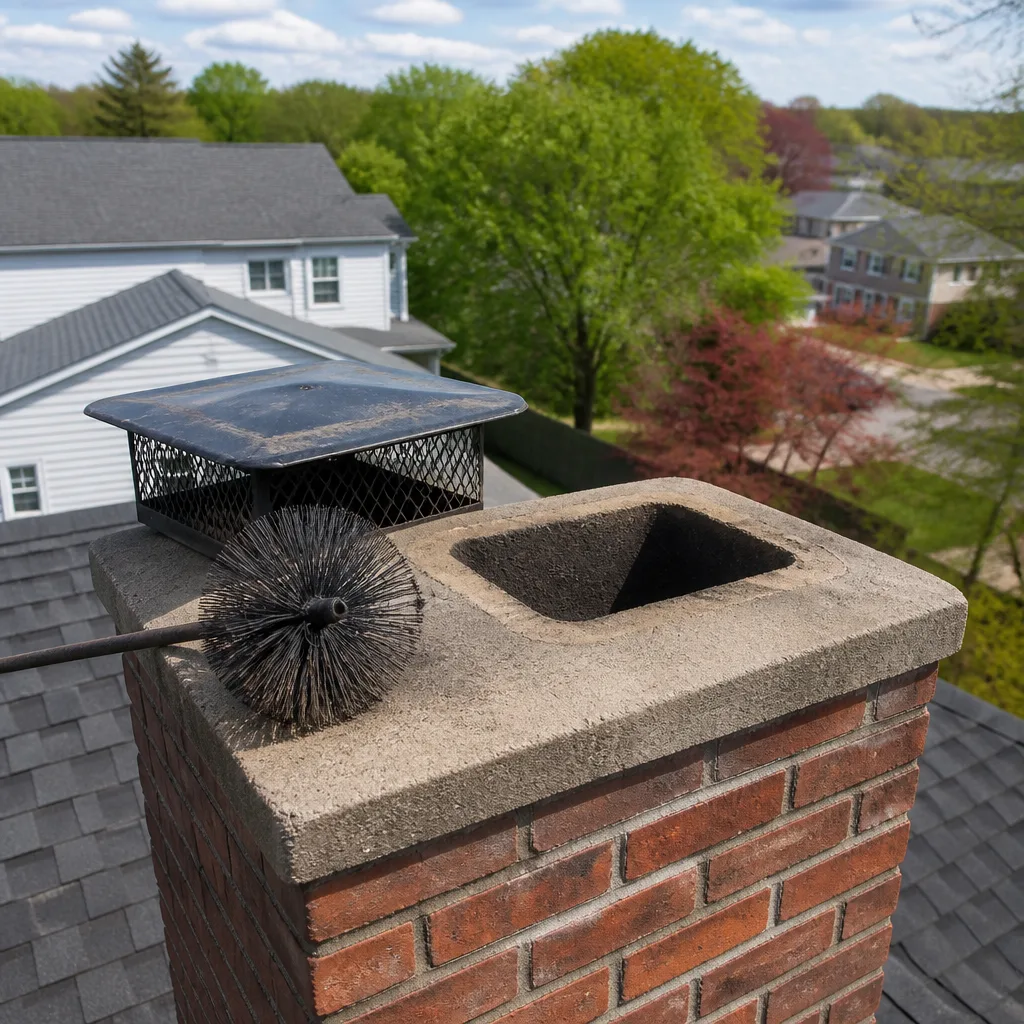 Sweep & inspection
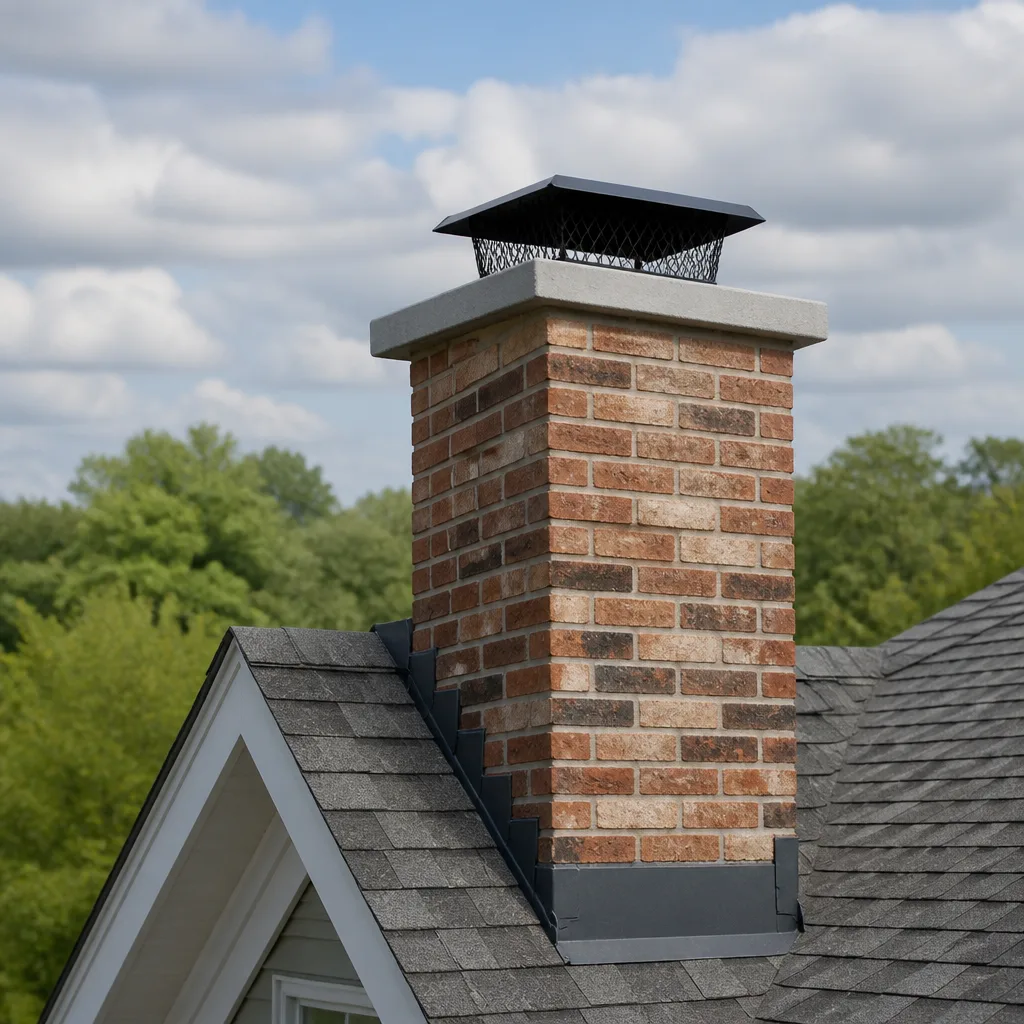 Caps & crowns
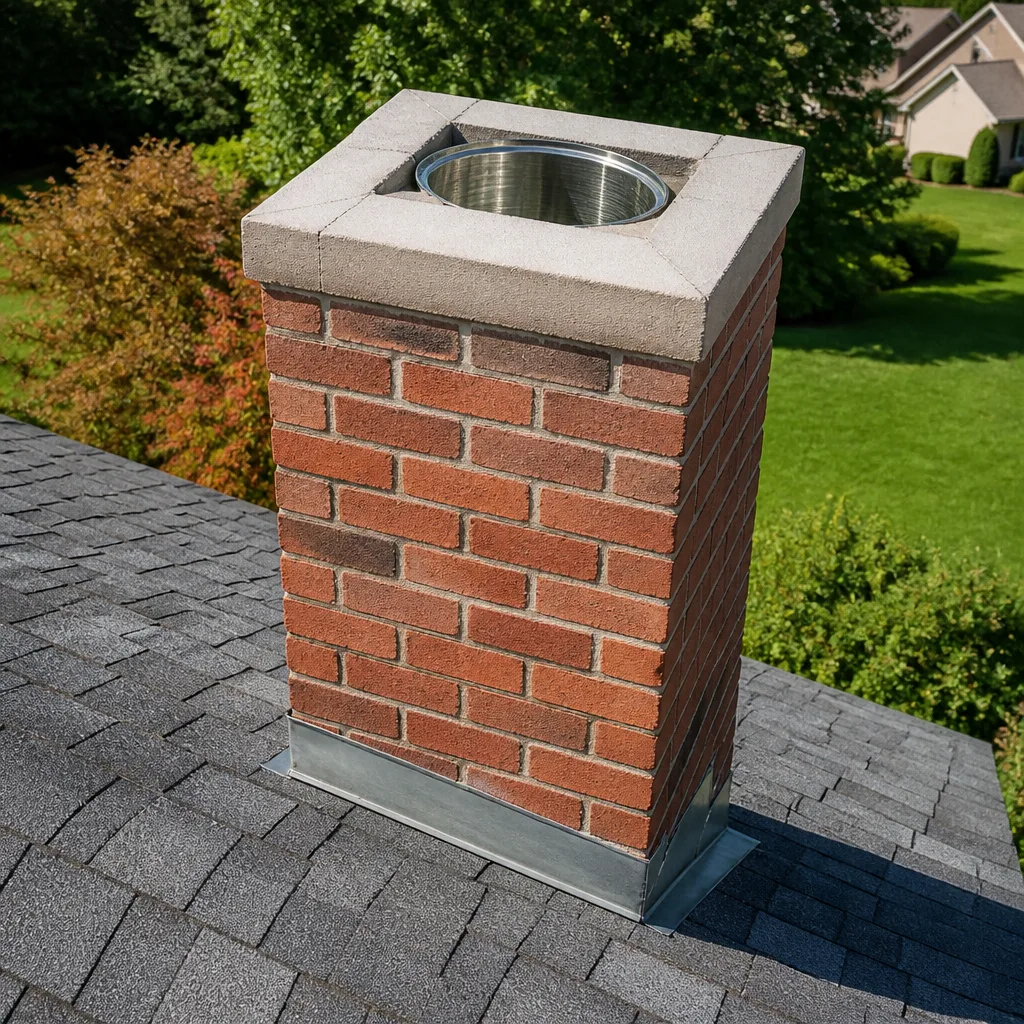 Flue relining
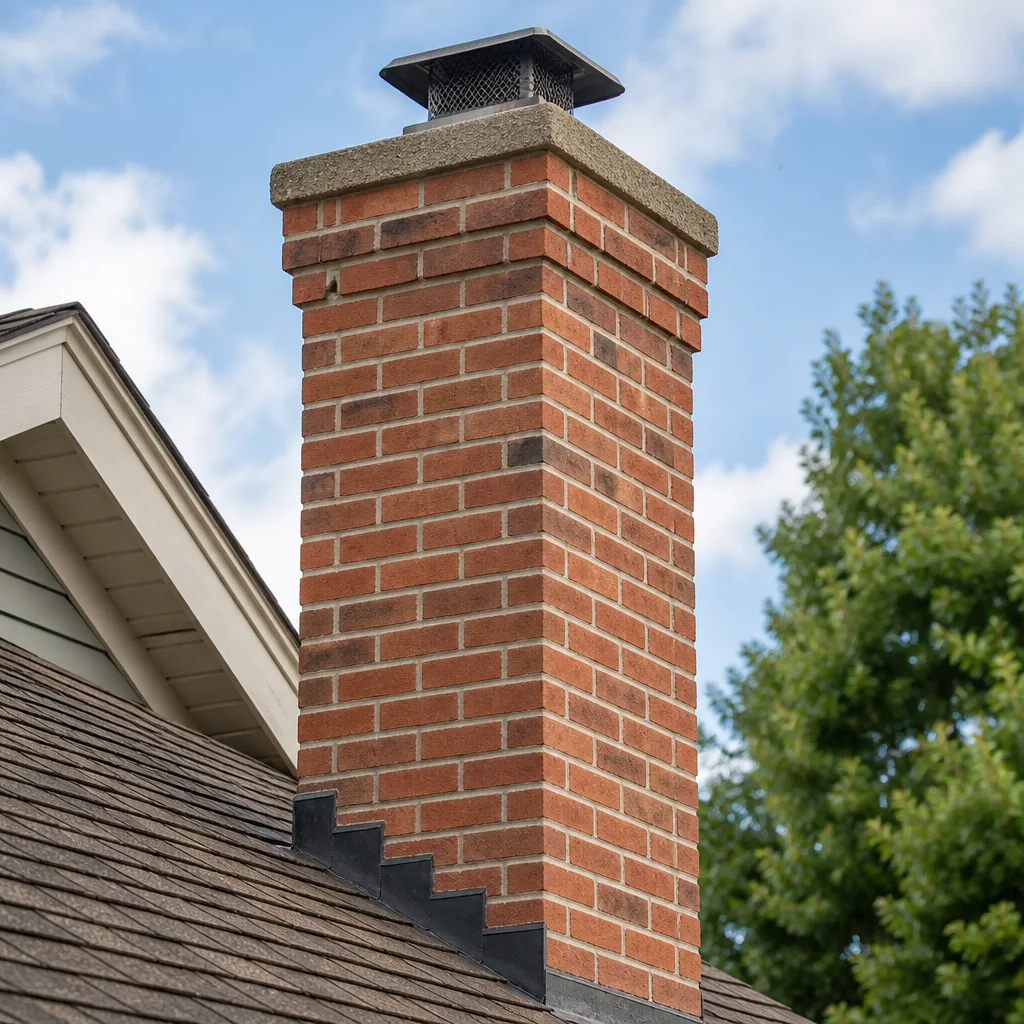 Masonry repair
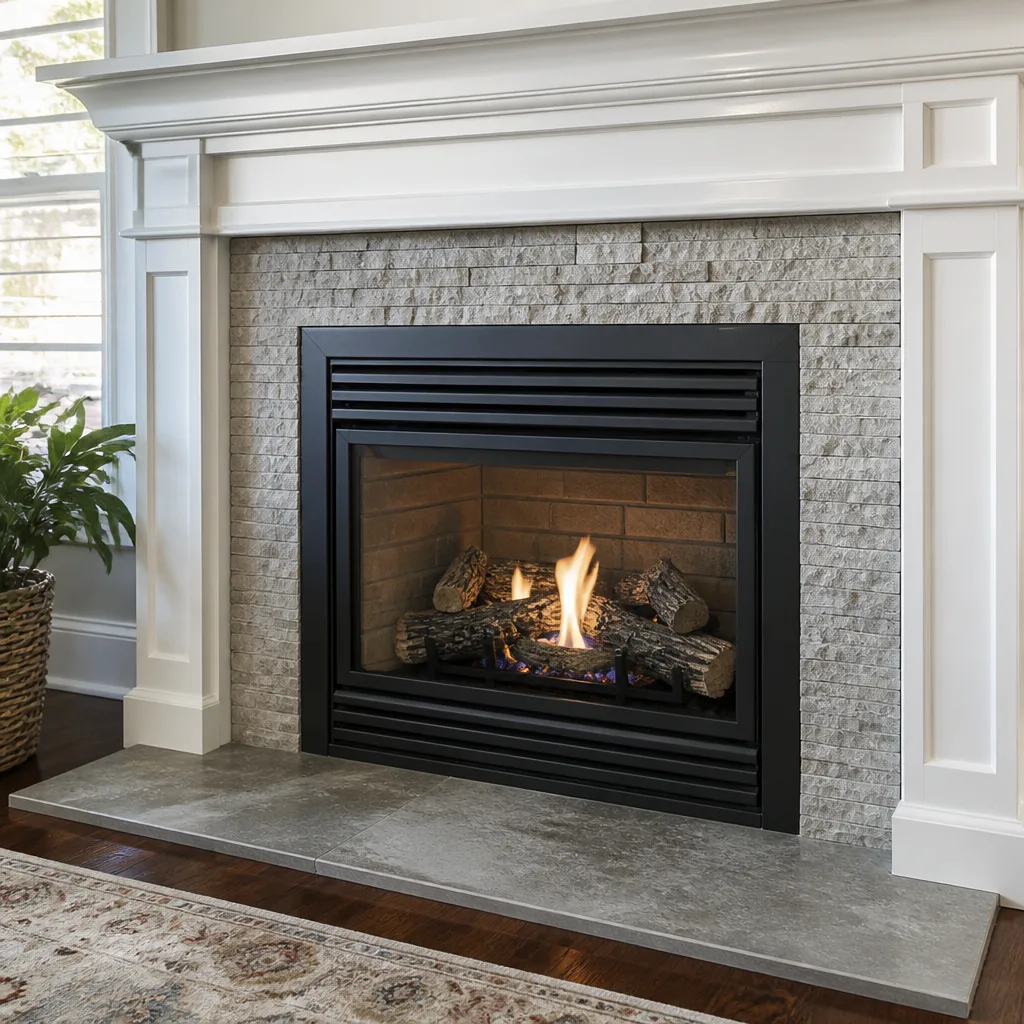 Gas fireplace service
Level 1 sweep and inspection to the NFPA 211 annual standard - flue, crown, cap, and flashing checked and photographed
Chimney sweep logs do not sweep chimneys. They loosen some creosote - which then falls where a brush and vacuum still have to collect it.
DIY vs Professional Chimney Cleaning: The Fashion District Homeowner’s Decision Guide
You can buy a chimney brush on Amazon and watch tutorials all afternoon. What those tutorials don’t show you is what a camera inspection reveals in a 1920s clay tile flue with an offset section: the place where creosote and debris actually accumulate, and where no brush on a flexible rod is going to reach consistently. This guide walks through what DIY sweeping actually accomplishes, what it misses, and where the line is between a task you can handle yourself and a job that needs a trained technician. If you live in the Fashion District, the age of your building and the configuration of your roofline change the calculation considerably.
Quick Answer
DIY chimney cleaning can remove loose ash and light surface soot from accessible firebox areas, but it cannot replicate what professional rotary cleaning systems accomplish inside flue bends, offsets, and smoke chamber ledges. In the Fashion District, where many buildings date to the 1920s and feature clay tile flues with offset sections, the areas you cannot see or reach are the areas most likely to hold dangerous creosote buildup. Professional sweeping with camera inspection costs less than most homeowners expect and gives you documentation of what was actually found.
Styles & brands we work with
- Sweep & inspection
- Caps & crowns
- Flue relining
- Masonry repair
- Gas fireplace service
Table of Contents
- What DIY Sweeping Actually Accomplishes
- What DIY Sweeping Misses
- The Equipment Gap: Consumer Brushes vs Rotary Systems
- The Roof Access Problem in the Fashion District
- Liability and Insurance in Multi-Unit Buildings
- The Legitimate DIY Role: What You Can Do Between Visits
- Common Mistakes to Avoid
- When to Call a Professional
What DIY Sweeping Actually Accomplishes
The honest answer is that a homeowner with a basic brush kit can remove loose soot and light Stage 1 creosote from the first few feet of a flue, assuming the flue is straight and the firebox is accessible. That is real work. It reduces the amount of fine particulate that can drift back into the living space when you open the damper, and it clears the ash and debris that builds up at the base of the firebox after a season of use.
But the word “cleaning” overstates what most DIY setups achieve. A brush on a flexible rod pushes material in one direction. It knocks loose what is already loose. It does not scrape away adhered creosote, it does not change the chemical composition of Stage 2 or Stage 3 deposits, and it cannot apply a chemical treatment that alters how creosote bonds to flue walls. Those are mechanical and chemical processes that require different equipment altogether.
In a Fashion District condo or loft, the firebox itself is often the only truly accessible part of the system. The flue above it is a clay tile channel running through the building’s core. You can reach what you can see. The rest remains a question mark until a camera goes up there.
What DIY Sweeping Misses
Creosote is not one substance. It forms in stages depending on burn temperature, wood moisture, and airflow. Stage 1 is a fine, dusty soot that brushes away easily. Stage 2 is a flaky, granular deposit that begins to bond with the flue wall. Stage 3 is a hardened, glossy glaze that resembles tar and resists mechanical brushing at consumer-grade force levels.
Stage 2 and Stage 3 creosote do not accumulate evenly. They concentrate where airflow changes: in bends, offsets, and the smoke chamber above the damper. These are precisely the areas a homeowner’s straight brush cannot reach. When a flexible rod curls around a corner, it loses contact pressure against the flue wall. The brush skates over the surface instead of scouring it.
We have inspected flues in the Fashion District where the first eight feet looked clean enough, but the offset section above carried a quarter inch of Stage 2 creosote across a three-foot run. The homeowner had swept the chimney themselves the previous spring. From the firebox, everything appeared fine. From a camera at the roofline, the reality was different. That gap between visible and actual is the entire DIY risk equation.
Professional chimney sweep work closes that gap with camera inspection before and after cleaning. You see what was there, and you see what was removed. That documentation matters, especially in a multi-unit building where your maintenance decisions affect neighbors above and beside you.
The Equipment Gap: Consumer Brushes vs Rotary Systems
The brush kit you buy for forty dollars is not a miniature version of professional equipment. It is a different tool category. Consumer kits use polypropylene bristles on flexible rods, powered by hand torque. Professional rotary systems use steel or high-density poly heads driven by a motorized shaft, spinning at speeds that create centrifugal force against the flue wall and generate enough friction to break Stage 2 deposits loose.
The difference in creosote removal rates is significant. A hand brush on a straight flue removes what a rotary system removes in a fraction of the time, but only in the sections where the hand brush maintains consistent contact. In offset and curved sections, the rotary system keeps mechanical advantage while the hand brush loses it. This is not a matter of effort. It is a matter of geometry and tool design.
Professional crews also run chemical treatments when conditions call for them, something no consumer kit includes. These treatments alter creosote bonding characteristics and make subsequent mechanical removal more effective. That combination of mechanical and chemical approach is standard in professional work and absent from DIY instructions.
Fireside Chimney Sweep uses this equipment category on every job, and we carry repair materials from HeatShield, Gelco, and Olympia Chimney when an inspection turns up flue damage that cleaning alone will not fix. The camera tells us what you could not have seen from the firebox.
The Roof Access Problem in the Fashion District
The Fashion District is not a neighborhood of standalone single-family homes with pitched roofs and open yard space around the chimney. It is a dense urban district where many residential units sit inside buildings constructed in the early twentieth century, with flat or low-slope roofs, shared rooflines, and HVAC equipment clustered around vertical penetrations.
Getting to a chimney top in this environment means navigating rooftop obstacles, setback structures, and access points that may be locked or managed by building management. Some buildings have no direct roof access from individual units at all. The chimney itself may be shared between multiple dwellings or positioned on a party wall where access requires stepping around parapets and mechanical units.
None of this is DIY work. Roof safety on a flat commercial-era building is not the same as climbing a suburban roof with a ladder. The fall hazard is real, the equipment requirements are different, and the building’s insurance policy likely prohibits residents from performing maintenance on shared vertical penetrations. This is a category where hiring a professional is not about skill level. It is about legal access and physical safety.
We navigate Fashion District rooflines as a routine part of the job. The roof access logic is different here than in the hills or the valley. Building managers know our crews. We know where the access hatches are and which rooftops have what kind of equipment to work around.
Liability and Insurance in Multi-Unit Buildings
If you own a single-family home with a private chimney, your insurance policy covers you for fire damage regardless of who performed the last cleaning. The insurer may ask questions after a claim, but the liability picture is straightforward. In a multi-unit building, it is not.
Most HOA and condo association governing documents assign maintenance responsibility for shared chimney systems either to the association or to the unit owner with specific conditions. Self-performed maintenance on a shared flue is almost never contemplated in those documents. If a chimney fire starts in a flue you swept yourself, and that flue serves multiple units, your neighbor’s insurance company will ask who last touched the system. The answer matters.
Homeowner’s insurance policies generally cover fire damage from a chimney fire, but they may deny or reduce a claim if the insured performed maintenance work beyond ordinary upkeep without professional documentation. The term insurers use is “reasonable maintenance.” A dated invoice from a professional Fireside Chimney Sweep visit is documentation. A memory of a Saturday afternoon with a brush kit is not.
In the Fashion District, where many buildings are condominiums or co-ops with interlocking ownership structures, this documentation gap is more consequential than in a detached home. Professional cleaning records are the practical currency of chimney safety in shared buildings.
The Legitimate DIY Role: What You Can Do Between Visits
The correct framing is not “DIY versus professional.” It is “what belongs to the homeowner, and what belongs to the technician.” The homeowner has a legitimate role, and doing it well extends the life of the system and reduces the frequency of professional intervention.
Here is what a homeowner can and should do between professional visits:
- Firebox cleanout. Remove ash and spent coals from the firebox using a metal ash shovel and a metal container with a tight lid. Do this whenever ash builds past an inch. This improves airflow and reduces the fine particulate that enters the room when you open doors or dampers.
- Damper lubrication. If your damper is a throat-mounted metal plate, apply a light machine oil or graphite lubricant to the hinge points once per burn season. This keeps it moving freely and helps you confirm it opens and closes fully before each fire.
- Exterior visual check from grade. Stand across the street or in the alley and look at the chimney top. You are looking for missing caps, visible cracks in the exposed masonry, leaning sections, or efflorescence that indicates water intrusion. You cannot see everything from grade, but you can see gross problems.
- Smoke and draft observation. During the first fire of the season, watch how smoke behaves in the firebox. It should draw upward cleanly. If smoke rolls back into the room, darkens the glass on an insert, or pools at the damper, stop using the fireplace and schedule an inspection.
- Wood moisture management. Buy a moisture meter for thirty dollars and test split wood before you burn it. The target is below twenty percent moisture content. Above that, you are creating creosote at an accelerated rate regardless of how often you sweep.
Notice what is not on this list: anything involving a brush inside the flue, anything on the roof, anything involving tools you have to lease or fabricate. The line between homeowner and technician is not about capability. It is about reach, visibility, and consequence if something goes wrong.
Common Mistakes to Avoid
- Assuming a clean firebox means a clean flue. The firebox is the most accessible part of the system, so it is the part DIY cleaning addresses. The flue above the damper is a separate question. A clean firebox tells you nothing about what is adhering to the clay tile twenty feet up.
- Burning “chimney cleaning logs” and expecting results. These products alter creosote chemistry but do not remove built-up deposits. They are a supplement to mechanical cleaning, not a replacement for it. Using one and considering the chimney clean is a category error.
- Using metal rods on a clay tile flue. Consumer rod kits with metal connectors can chip or crack clay tile liners when pressure is applied through an offset. A cracked tile is a repair problem that did not exist before the DIY session.
- Accessing the roof without building approval. In Fashion District multi-unit buildings, the roof is often a controlled space. Climbing up without permission creates liability issues with the building that dwarf any money saved on a professional sweep.
- Ignoring smoke behavior changes. A fireplace that drew fine last year and now spills smoke is signaling something. It may be a creosote blockage, a failed damper, or negative pressure from a new exhaust fan. None of these resolve themselves.
- Cleaning an unknown flue in a newly purchased unit. If you just bought in the Fashion District and do not know when the chimney was last professionally inspected, do not light the first fire and do not start a DIY cleanout. Get a camera inspection first. The previous owner’s maintenance habits are unknown until documented.
- Skipping dryer vent maintenance. The same buildings with chimneys also have dryer vents running through walls and ceilings. Dryer vent buildup is a leading cause of appliance fires, and it is invisible in daily use. Dryer vent cleaning pairs naturally with chimney sweeping in multi-unit buildings, and skipping one because you addressed the other leaves a real gap.
When to Call a Professional
Call when you see smoke rollback, when you notice a persistent odor even with the damper closed, when your building management asks for documentation of the last cleaning, when you buy a unit with no maintenance history, or when a visual check from grade shows something that concerns you. Also call before the burn season starts in late fall, rather than after the first fire exposes a problem. A chimney sweep that finds Stage 3 creosote or a cracked flue tile can schedule repair work on the spot, while a homeowner who burns into the problem risks a chimney fire that affects neighboring units.
Fireside Chimney Sweep offers free estimates in Fashion District. Call (844) 963-3205. We answer 24/7. Fast dispatch from 7am to 7pm, Sunday through Friday.
See the difference
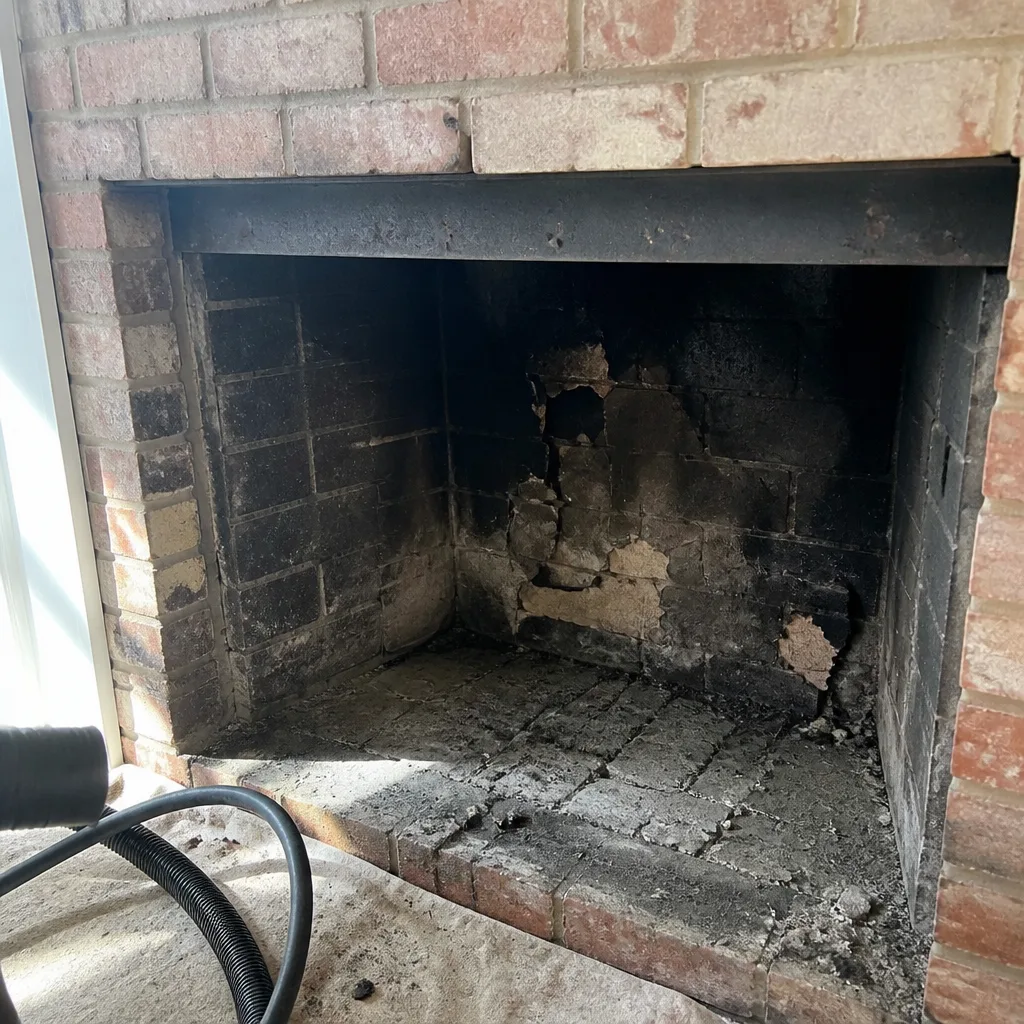 Before
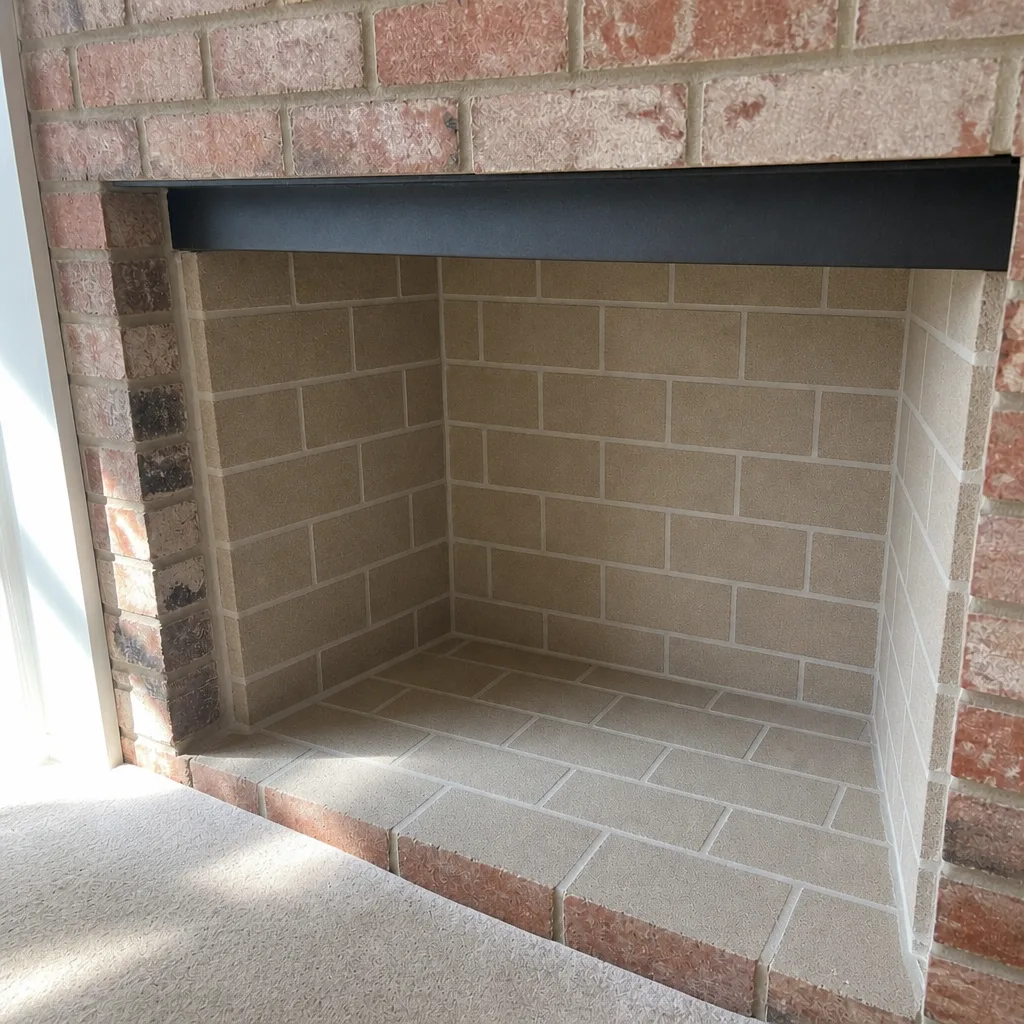 After
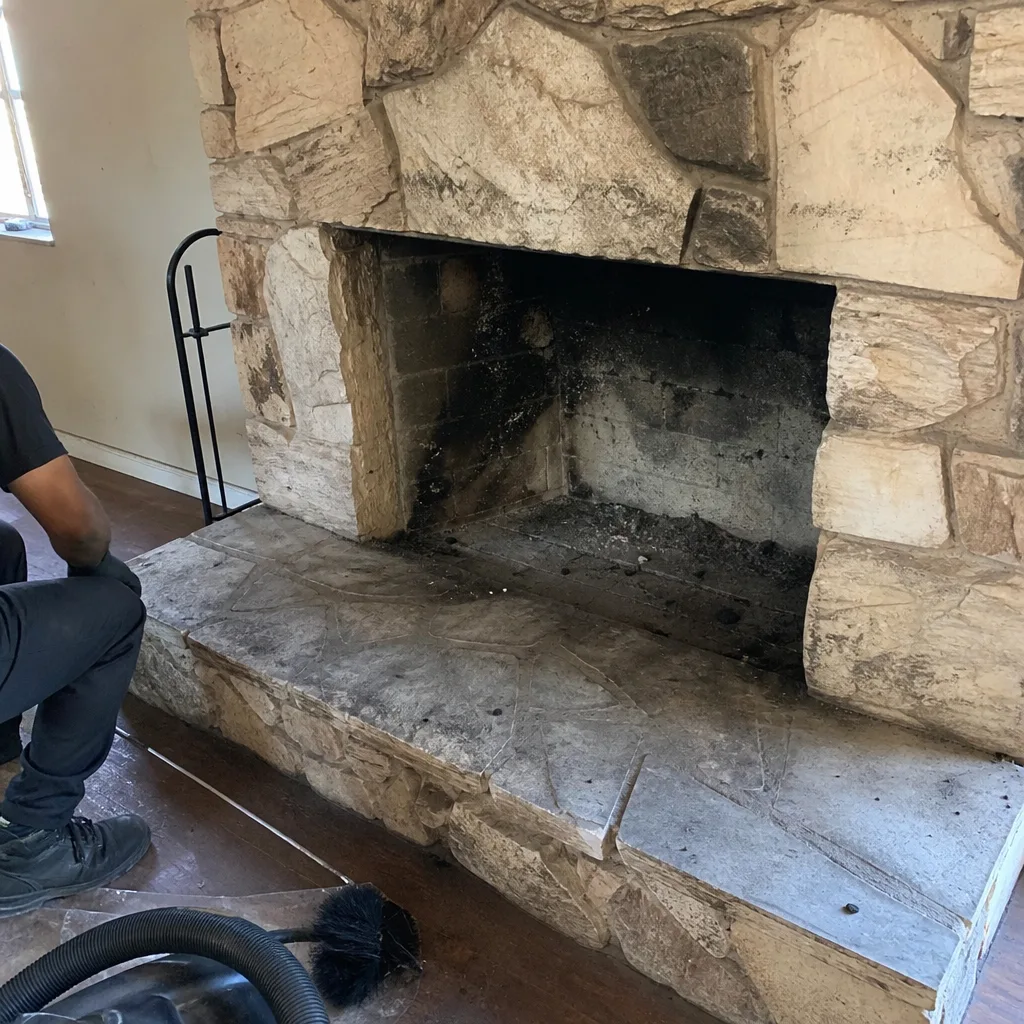 Before
 After
 Before
 After
Frequently Asked Questions
A standard chimney sweep in the Fashion District typically runs in the low hundreds, and the price varies based on flue height, access difficulty, and the degree of creosote buildup. The written estimate sets the final price, and the estimate is free. Call (844) 963-3205 for a specific quote.
You can clean the firebox and remove ash, but the flue itself in a multi-unit building is usually a shared or controlled system that requires professional access, professional equipment, and documentation. Check your HOA documents first, then call a professional for the flue work.
The National Fire Protection Association recommends annual inspection and cleaning as needed, and that standard applies here. Even with mild winters and light use, a chimney that burns any wood should be inspected every year. The inspection determines whether cleaning is due, not a fixed calendar interval.
Creosote continues to build, especially in the bends and offsets you cannot see. At Stage 3, it becomes a fuel source waiting for a spark. A chimney fire in a multi-unit building is a different event than in a detached home, because the fire can spread through shared walls and affect units you do not own.
The camera inspection is what tells you and your technician what is actually in the flue, including the sections no brush can reach. Without it, you are paying for effort without information. We include camera inspection as part of our professional sweep process.
We are closed Saturday. We are open Sunday through Friday, 7am to 7pm. Call (844) 963-3205 and we will book you into the next opening.
The Bottom Line
DIY chimney cleaning in the Fashion District works for the firebox and the visible areas within arm’s reach. It does not work for the flue itself, and the parts you cannot see are the parts most likely to hold dangerous creosote. The equipment gap is real, the roof access problem is structural to urban buildings, and the liability picture in a multi-unit context changes the stakes entirely. Do the homeowner tasks well: clean the ash, check the damper, watch the smoke, monitor your wood moisture. Leave the flue to a professional with a camera and the right tools.
Written by the team at Fireside Chimney Sweep, serving Fashion District since 2012.