
Last updated November 5, 2026
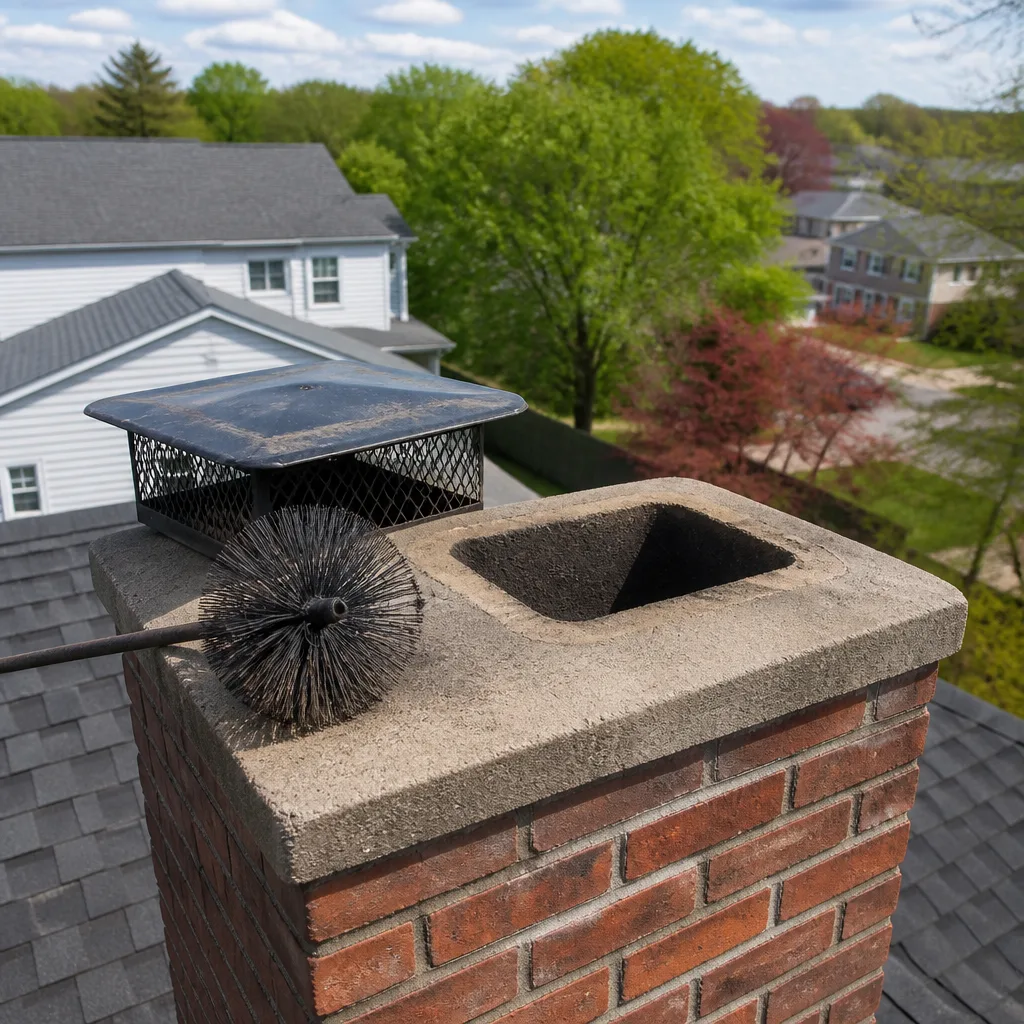 Sweep & inspection
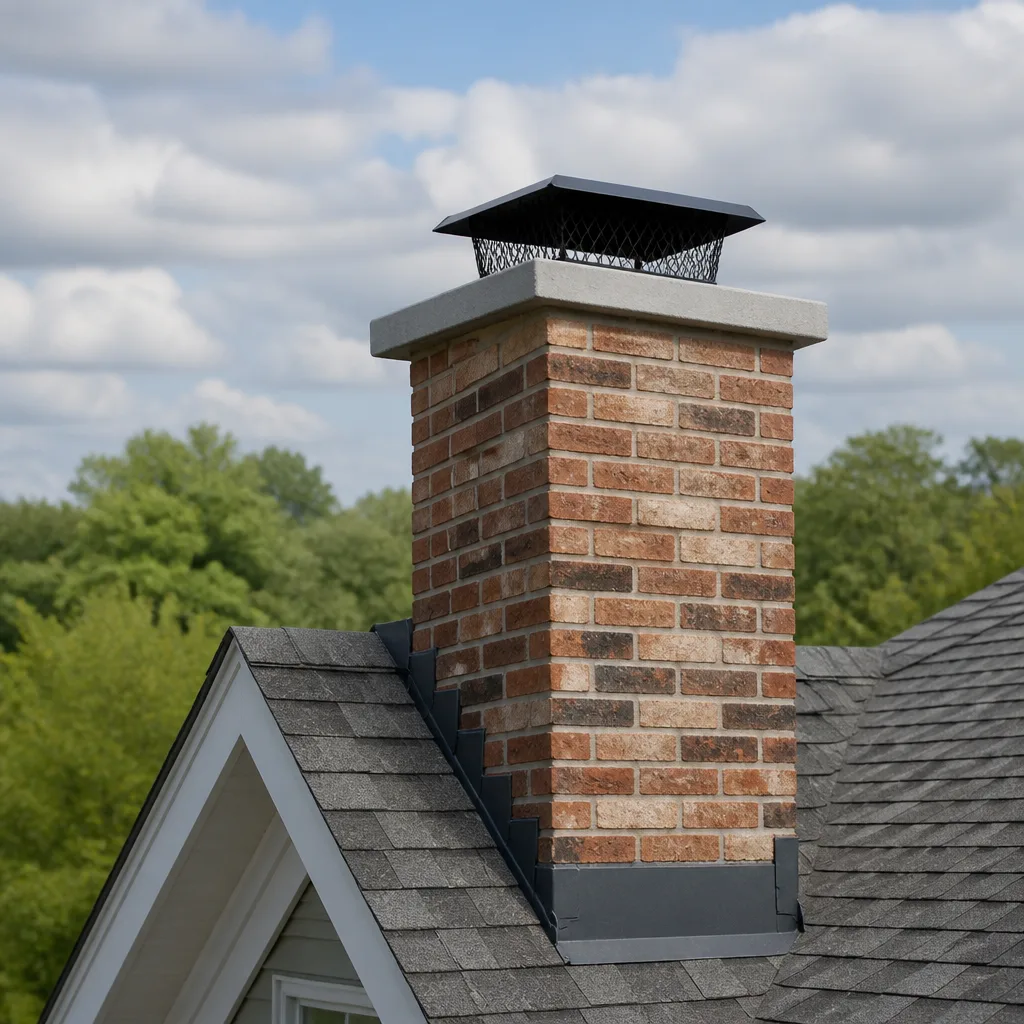 Caps & crowns
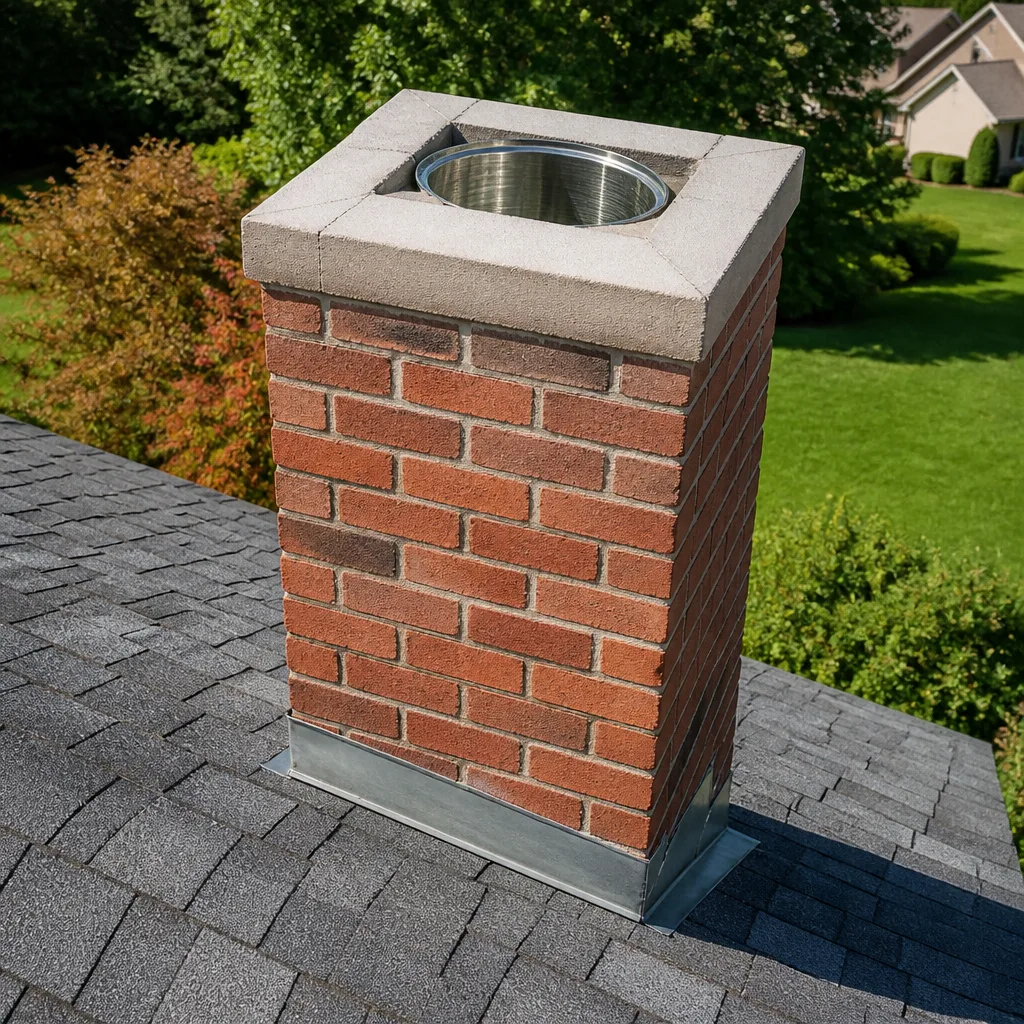 Flue relining
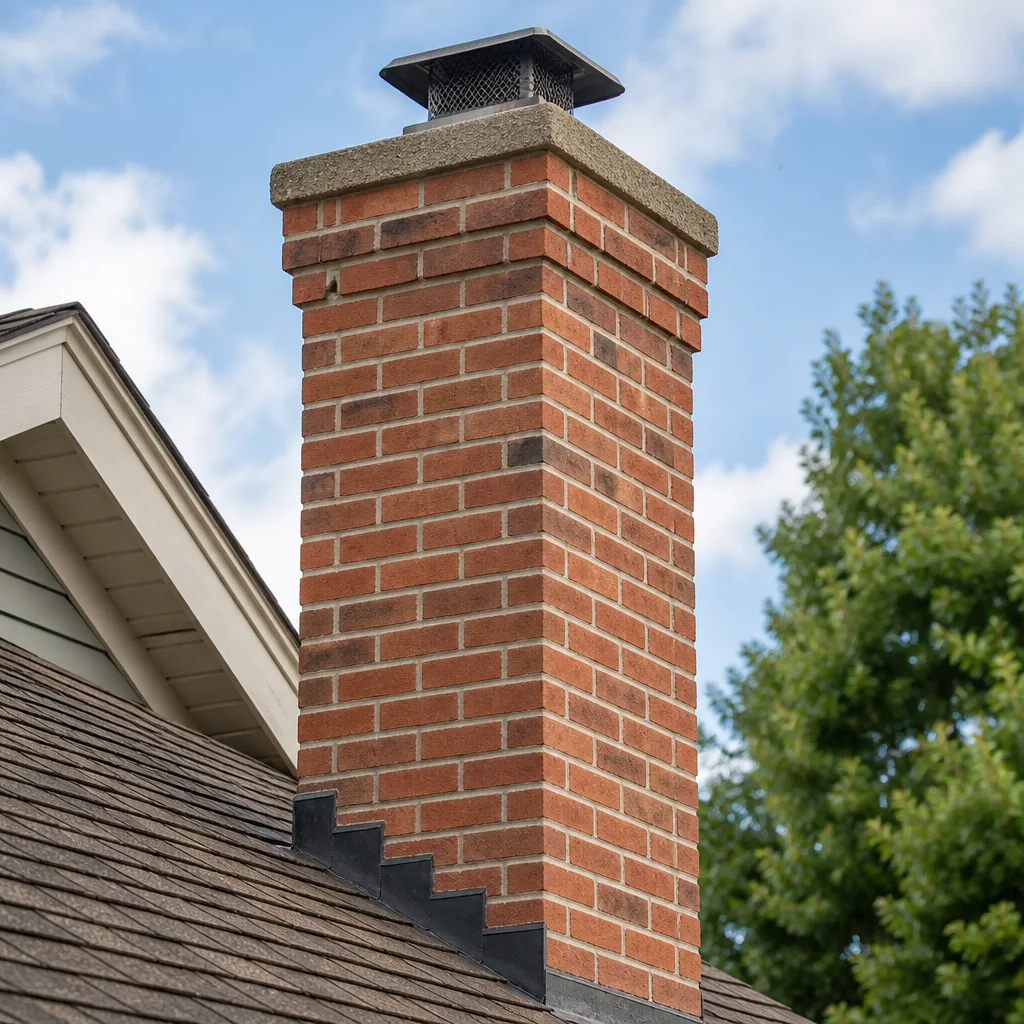 Masonry repair
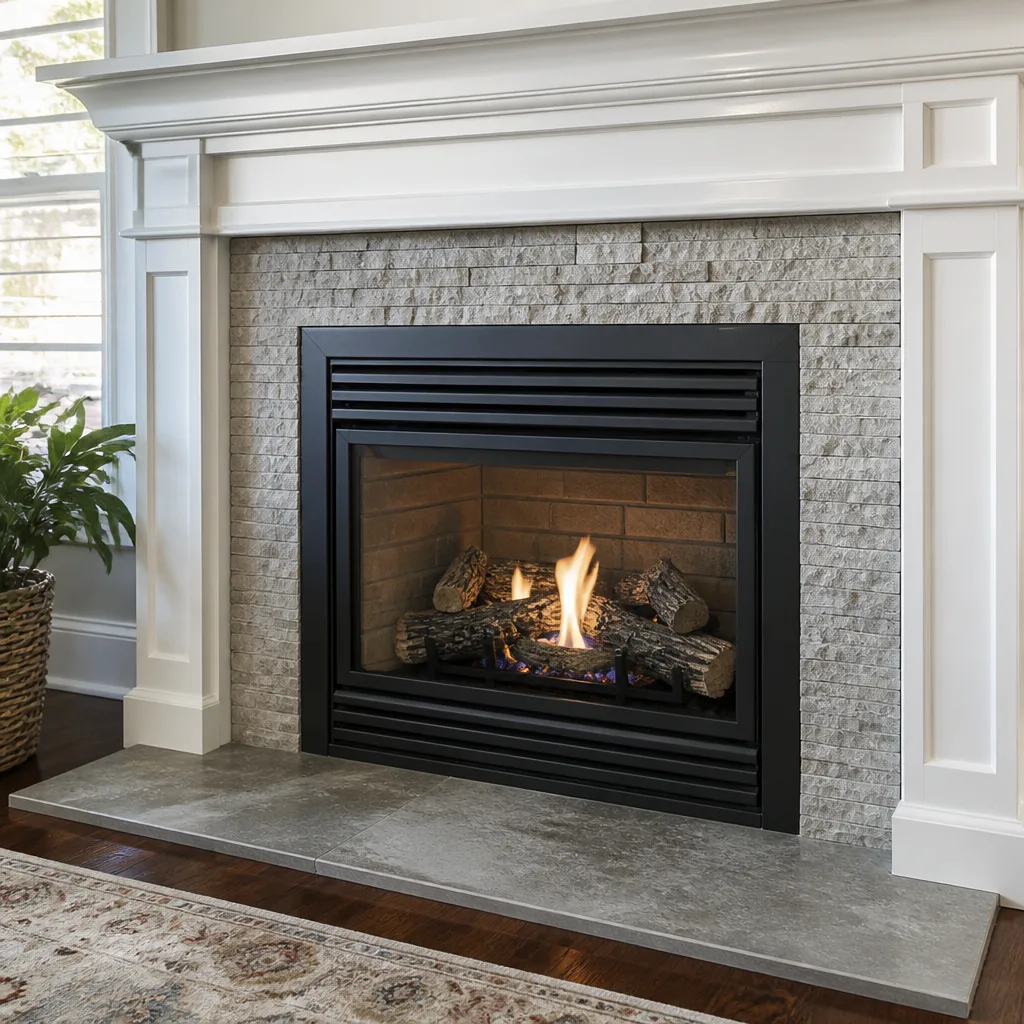 Gas fireplace service
Level 1 sweep and inspection to the NFPA 211 annual standard - flue, crown, cap, and flashing checked and photographed
Chimney sweep logs do not sweep chimneys. They loosen some creosote - which then falls where a brush and vacuum still have to collect it.
Chimney Sweep Maintenance Checklist for Fashion District Homeowners
Most chimney advice assumes you live in a suburban tract home with a brick fireplace that’s been used the same way for forty years. But the standard “inspect once a year” guidance breaks down quickly in Fashion District, where a loft conversion might stack a modern gas insert inside an original masonry flue that was built when the building housed garment manufacturing equipment, not living rooms. The materials don’t always agree with each other, the venting was often retrofitted rather than designed, and problems hide behind layers of renovation. This checklist is built around what actually fails in this neighborhood: old clay tile liners, settlement cracks, compromised mortar at the roofline, and vent runs that share wall cavities with dryer exhaust. You’ll learn what to check yourself, what needs a camera and a trained eye, and how to keep records that protect you when you sell.
Styles & brands we work with
- Sweep & inspection
- Caps & crowns
- Flue relining
- Masonry repair
- Gas fireplace service
Quick Answer
A chimney maintenance checklist for Fashion District homeowners should cover four areas: visual inspection of the chimney crown and exposed brick, damper and smoke chamber function, liner and flue integrity (checked with a camera, not a flashlight), and dryer vent condition if your unit routes the dryer through the same chase. Sweep and inspect annually if you burn wood, and before your first fire of the season if your building’s flue predates your insert. In our experience, most older structures in Fashion District need a camera inspection at least once, because liner damage is rarely visible from the rooftop or the firebox.
Table of Contents
- Visual Checklist: What You Can Check From Outside
- Inside Checklist: Firebox, Damper, and Smoke Chamber
- Liner Inspection: Why Fashion District Buildings Need a Camera
- Seasonal Routine for Fashion District Homeowners
- Dryer Vent Checklist: Parallel Maintenance for Loft and Condo Setups
- Recordkeeping: What to Keep and Why It Matters
- Common Mistakes to Avoid
- When to Call a Professional
- Frequently Asked Questions
- The Bottom Line
Visual Checklist: What You Can Check From Outside
You don’t need to climb onto the roof to spot early warning signs. Stand across the street or at the far edge of your building’s air shaft, if you have one, and look at the chimney from a distance. You’re checking for things a ground-level glance misses. Many Fashion District buildings have flat or low-slope roofs, which means the chimney crown sits more exposed to direct sun than it would on a pitched suburban roof, and that exposure accelerates wear on masonry sealant.
A homeowner-level visual check involves five items:
- Crown condition. The crown is the concrete cap at the very top of the chimney. Look for visible cracks, missing chunks, or moss growth. A cracked crown lets water into the masonry and down into the flue, which is one of the most common pathways to liner damage in older buildings.
- Mortar joints. On exposed roofline sections, deteriorated mortar joints show up as gaps or crumbling between bricks. In Fashion District, many buildings date to the 1920s and retain original brick; the mortar in that era often contains more lime than modern mixes, and it erodes faster once the chimney is no longer sealed properly.
- Spalling brick. Spalling is when the brick face flakes or pops off, leaving a rough, pitted surface. It’s caused by moisture penetration, and it’s common on chimneys in older urban buildings where decades of repointing have created uneven drainage. Look for brick fragments on flat rooftop surfaces below the chimney.
- Flue cap presence. A missing or damaged flue cap is an open invitation to rain, birds, and debris. If your building has a gas appliance vented through the chimney, a missing cap also lets downdrafts push exhaust back into the living space.
- Chase cover rust. If your chimney is housed in a metal or wood chase, check the metal top from an adjacent window or roof access point. Rust blooms on a chase cover mean water is already getting through and onto the flue pipe and insulation beneath.
None of these items requires special training to spot. But if you see any of them, the correct next step is a professional chimney sweep with camera inspection equipment, not a tube of caulk. Surface fixes don’t address what’s happening inside the flue.
Inside Checklist: Firebox, Damper, and Smoke Chamber
The interior of the chimney tells a story that the exterior can’t. In a Fashion District loft or condo, the firebox may be original, or it may have been modified when the building was converted for residential use. Previous owner modifications are the wildcard, and they’re frequently the source of smoke rollback, drafting problems, and fire hazards that a standard exterior check would never reveal.
Here is a step-by-step interior checklist you can perform without tools:
- Check the damper movement. Open and close the damper several times. It should move freely through its full range without sticking, scraping, or requiring force. If it won’t fully open, you’re burning with restricted airflow, which means incomplete combustion and faster creosote buildup. If it won’t fully close, warm air escapes through the flue year-round and cold air drops in during winter, even mild Los Angeles winters.
- Look up into the smoke chamber. Shine a bright flashlight upward from the firebox, past the damper, into the smoke chamber. The smoke chamber walls should look dark but smooth. If you see flaking, beige or white patches, or areas where the surface looks glazed and shiny, that indicates creosote or a breach in the parging. The smoke chamber is the most neglected section of most chimneys because it’s hard to reach, but it’s also a fire hazard if the surface has deteriorated.
- Inspect the firebox walls. Look for cracks in the firebrick, gaps between firebrick and the surrounding masonry, or deteriorated refractory panels in a prefabricated unit. Hairline cracks are often cosmetic. Gaps you can fit a coin into are not, and they need evaluation before the next fire.
- Check for white staining. Efflorescence, a white powdery residue on masonry inside or just above the firebox, means water is moving through the chimney structure. It may be from a crown leak, a flashing failure, or condensation inside an unlined flue. In Fashion District buildings with shared chimney stacks, water may also be entering through a neighbor’s side of the stack.
- Run a simple smoke test. On a day with moderate weather, light a small piece of newspaper and hold it up inside the firebox opening. The smoke should rise into the chimney. If it curls back into the room or dissipates without rising, you have a draft problem, which may be caused by a blocked flue, an undersized liner, or a nearby building or parapet wall affecting wind flow.
None of these five checks certifies a chimney as safe. They tell you whether something is visibly wrong. A clean-looking firebox can still hide a cracked flue liner twenty feet up, which is why the interior checklist always ends with a camera inspection when the chimney hasn’t been evaluated recently.
Liner Inspection: Why Fashion District Buildings Need a Camera
If you take one point from this guide, make it this: a visual sweep is not the same as a liner inspection. Clay tile liners, which are standard in pre-1960s buildings, crack over time due to settlement, water entry, and thermal stress. Once a flue tile cracks, the gap exposes the surrounding masonry and whatever is next to it to heat and exhaust. In a converted industrial building, that surrounding material may be old timber framing, lath and plaster, or a neighbor’s wall cavity, not just a simple brick chase.
Fashion District buildings have settled. It’s not a dramatic statement; it’s what a century of soil movement and adjacent construction does. When a building settles, rigid clay tile liners don’t flex. They crack at the joints. The only reliable way to confirm liner condition is a video scan of the entire flue length. A camera inspection takes fifteen to twenty minutes, and it produces footage you can watch, not just a technician’s verbal summary.
When we inspect a chimney in Fashion District with a camera, we’re looking for:
- Gaps between flue tiles. The most common settlement-related defect. Gaps let heat and exhaust reach the building structure and can allow creosote to accumulate in the void.
- Vertical cracks. Often caused by uneven heating or water freezing inside the tile. Vertical cracks in the upper flue are the leading structural cause of chimney fires spreading to the house.
- Spalled flue surfaces. Pieces of tile that have broken loose and fallen into the flue, sometimes blocking airflow or creating a shelf where creosote builds.
- Improperly sized liners. This matters in Fashion District more than in the suburbs because of appliance retrofits. A flue that was originally sized for a coal-burning stove or a large boiler may be too large for a modern gas insert, or too small for a wood stove installed later. Either mismatch creates drafting problems and code compliance issues when you sell.
- Previous repair attempts. We see chimneys that were patched with mortar smeared over cracked tiles years ago. Mortar doesn’t restore a liner’s structural integrity, and it often masks worse damage behind it.
If the camera reveals cracked tiles or significant gaps, the discussion shifts from cleaning to repair. Depending on what the scan shows, options may include resurfacing with HeatShield, a professional-grade ceramic restoration system that coats and seals damaged flue tiles, or installation of a DuraFlex flexible liner system when the existing tile is too far gone or the flue needs resizing. The point of the camera is not to sell you something; it’s to show you exactly what’s in your chimney, on video, so you can make a decision based on evidence rather than a verbal diagnosis.
Seasonal Routine for Fashion District Homeowners
Los Angeles winters are mild, which creates a counterintuitive problem: homeowners defer maintenance because the fireplace feels optional most months. But infrequent use doesn’t mean a chimney stays clean. It means any moisture, debris, or animal activity that entered during the off-season sits undisturbed for longer. And when the fireplace finally gets used on a cool January evening, the chimney is often in worse condition than a suburban chimney that’s swept every fall.
Here is a seasonal maintenance routine that fits a Fashion District household:
- Late summer or early fall: Book your sweep and camera inspection before the winter burning season. If you use a wood-burning fireplace or stove, aim for a sweep at least once per year, or more often if you burn more than a cord or rely on it as a primary heat source. If you have a gas insert, an annual inspection is still appropriate because gas appliances produce acidic condensate that degrades mortar and liner surfaces over time.
- First firing of the season: After the sweep, do the interior checklist above: damper movement, visual check of the firebox, and a smoke test. Run the fireplace at a low burn for the first hour. This lets newly exposed surfaces cure gradually.
- Mid-season check: After several weeks of use, look for changes: soot accumulation at the fireplace opening, a new smell during rain, or a change in draft. Moisture-related problems often show up mid-winter, even in a mild climate, because storm systems and temperature swings alternate.
- Late spring: If burning season is over, close the damper, but not before doing one last visual check for animal activity or nesting debris. Urban pest pressure in Fashion District means birds, squirrels, and rats probe rooftop openings in spring. Close things up promptly.
- Any time, before a major renovation: If you’re remodeling, adding a bathroom fan, changing a dryer, or upgrading HVAC, and any of it ties into the chimney chase, get a camera scan first. Renovation changes pressure dynamics, and an older flue may need a liner upgrade to handle the altered system.
This routine is not about filling a calendar with busywork. It’s about catching problems when they’re small, which in an older building is almost always cheaper than catching them after water has been running through the flue for six months.
Dryer Vent Checklist: Parallel Maintenance for Loft and Condo Setups
In a standalone house, the dryer vent runs through an exterior wall and terminates within a few feet of the machine. In Fashion District loft and condo buildings, the runs are often much longer, sometimes 15 to 30 feet, with multiple turns, and they may route through the same wall cavity or chase as the chimney. That shared routing makes dryer vent cleaning a chimney-adjacent maintenance item, not a separate chore.
Why this matters:
- Lint builds faster in long runs. Every foot of additional vent length and every bend adds internal resistance where lint accumulates. A 25-foot vertical run in a converted warehouse accumulates lint faster than a 6-foot horizontal run in a house.
- Shared chases mean shared risk. If your dryer vents into the same building cavity that carries a chimney, accumulated lint is a fire hazard, and any breach between the vent and the chase can push lint into the chimney void, where it becomes fuel near a heat source.
- Structural settlement shifts vent joints. Older buildings settle, and vent pipe joints can separate. A separated joint dumps moist, lint-laden air into the wall cavity, which is both a mold risk and a fire hazard.
Your dryer vent checklist should include:
- Check the exterior termination. If you can access the exhaust point, confirm the flap opens when the dryer runs and closes when it’s off. Confirm lint isn’t accumulating on the surrounding wall or window.
- Time your dry cycle. A sudden increase in drying time, such as a load that used to dry in 40 minutes now taking 70, is the single most reliable indicator of restricted airflow in the vent.
- Inspect the lint screen housing. Remove the screen and look into the slot. If you see lint on the inner walls of the housing or in the duct opening, there’s buildup downstream.
- Check the connection at the dryer. The transition hose should be rigid or semi-rigid metal, not foil or plastic. It should fit snugly without kinks. Foil hoses are prone to crushing and get hot enough to ignite under restricted airflow.
- Know your cleaning interval. For a typical Fashion District unit with a long vertical run, plan on professional dryer vent cleaning every 12 to 18 months. If you do laundry daily or the run is longer than 20 feet, every 12 months is safer.
Dryer vent blockage is the leading cause of household dryer fires, cited consistently in fire safety data. It’s also a problem that announces itself only in the late stages, which is why housekeeping habits are not enough. The vent needs mechanical cleaning with a rotating brush system to pull lint from the full run length.
Recordkeeping: What to Keep and Why It Matters
In an urban market like Fashion District, chimney and vent maintenance records are not just for your own reference. They’re evidence for insurance adjusters, answers for building inspectors, and documentation that adds credibility when you sell a loft or condo with a working fireplace. A missing maintenance history can turn a minor claim into a denied one, and it can scare off a buyer who’s already nervous about buying into a 90-year-old building.
Keep the following for every service visit:
- Dated invoice or work order. It should list what was done: sweep, camera inspection, liner repair, cap replacement, dryer vent cleaning. Specificity matters. “Chimney service” doesn’t tell anyone what happened.
- Camera inspection footage. Request a copy of the video or still images from the scan. Save it to a folder that will survive a phone upgrade. If you later file an insurance claim or negotiate a sale, this footage is primary evidence of condition at a point in time.
- Written inspection report. This summarizes what the technician found, what work was done, and what was recommended but deferred. Keep the deferred items in a visible place, because they’re the things that will get flagged in a future inspection.
- Product documentation. If any components are installed, such as a flue cap, a damper, or a DuraFlex liner, keep the manufacturer’s specifications. Olympia Chimney caps, Famco connectors, and Copperfield components each have documentation that establishes what was installed and when.
- Photographs before and after. If repair work is done, ask for before-and-after photos. These are useful for HOA disputes, particularly in buildings where chimneys are shared or maintenance obligations are divided between common and individual areas.
The habit to build is simple: the day after any chimney or vent service, put everything in one folder. In a city where real estate transactions move fast and buyers ask pointed questions about older buildings, that folder is one of the quieter advantages a careful homeowner can hold.
Common Mistakes to Avoid
- Skipping the camera inspection because “the sweep said it was fine.” A sweep removes creosote. It doesn’t assess liner condition. In older Fashion District buildings, a clean chimney can still have cracked flue tiles, and only a camera confirms what’s happening inside the flue.
- Trusting a previous owner’s word. “The inspector looked at it when we bought” is not documentation. Ask to see the written report and the camera footage. Without those, you have a verbal claim about a structurally significant system you’ve never personally verified.
- Burning wood in a fireplace originally built for coal. Many pre-war buildings in Fashion District were designed for coal or early gas. Coal burns hotter and cleaner than wood in terms of creosote, but wood puts different demands on the flue. If you’ve switched fuels, the liner sizing and material need to be checked against the new use.
- Venting a gas appliance through a flue sized for wood. Gas inserts produce cooler exhaust, which rises more slowly and condenses inside an oversized clay flue. The condensate is acidic and eats at mortar. If a previous owner put a modern gas insert into a flue built for a larger appliance, you need a liner evaluation.
- Ignoring the dryer vent because “it’s not a chimney.” In lofts and condos where the vent runs through the same chase as the flue, these systems interact. Lint accumulation near a warm flue is a fire hazard, and a leaky vent joint can push moisture into the chimney system.
- Deferring maintenance during mild winters. Los Angeles winter weather is mild enough that fireplaces go unused for months, but chimneys don’t “rest.” Moisture, pests, and animal activity continue. Deferred maintenance in a mild climate often produces more severe damage because problems are invisible for longer.
- Fixing surface problems without investigating underneath. Sealing a cracked crown or repointing a few loose bricks addresses the symptom. If water already entered the flue, the liner may be damaged, and the cosmetic repair just traps moisture inside. Investigate first, repair second.
When to Call a Professional
You should call a Fireside Chimney Sweep technician when you see any of the following: smoke rollback into the room, a persistent odor from the fireplace when it’s not in use, white staining or water marks on interior walls near the chimney, spalling brick or crumbling mortar visible from the ground, or a dryer that’s suddenly taking twice as long per cycle. These are not items to watch through another season. Each one points to a structural or venting problem that gets more expensive the longer it waits. Fireside Chimney Sweep offers free estimates in Fashion District, and our technicians arrive with camera equipment so you can see the diagnosis for yourself before anyone quotes a repair. Call (844) 963-3205. We answer 24/7. Fast dispatch from 7am to 7pm, Sunday through Friday.
Frequently Asked Questions
A standard chimney sweep in Fashion District typically costs $180 to $340, depending on the flue’s condition, height, and whether the chimney has been used heavily. A camera inspection is a separate line item and usually runs $80 to $160 when bundled with a sweep. The clearest way to know your price is to call (844) 963-3205 for a written estimate, which is free.
If you burn wood, sweep annually, or sooner if you use the fireplace as a primary heat source. If you have a gas insert, an annual inspection is still recommended because gas exhaust produces acidic condensate that degrades mortar and older tile liners over time, even when there’s no creosote. In older Fashion District buildings, the first inspection should always include a camera scan to establish a baseline.
You should never accept a liner recommendation without camera evidence. A full video scan shows cracked tiles, gaps, and spalled surfaces in a way that a verbal summary can’t. If damage is visible on the footage, the choices are typically HeatShield resurfacing, which coats and seals damaged tile from the inside, or a DuraFlex liner when the existing tile is too far gone or needs resizing. Call (844) 963-3205 and ask for a camera inspection with footage you can watch.
Creosote builds up, liner cracks go undetected, and water enters through crown or mortar failures and damages both the flue and the surrounding building structure. In a worst case, creosote ignites and a chimney fire sends heat through a cracked tile into old timber framing. More commonly, you discover during a sale that the chimney fails inspection, and you’re negotiating repairs under a closing deadline instead of on your own schedule.
Gas fireplaces don’t produce creosote, but they still need annual inspection. The acidic condensate from gas exhaust degrades mortar and tile, and a gas appliance vented into an oversized flue can have chronic drafting problems. Many Fashion District lofts have gas inserts retrofitted into older chimneys, and those are exactly the cases where a camera inspection matters most before the first fire of the season.
A sweep and camera inspection together typically takes 45 to 90 minutes. The sweep portion removes creosote and debris, and the camera scan documents the flue from top to bottom. You’ll get the written report and access to footage the same day, along with a clear explanation of anything that was found and what, if anything, needs attention before burning resumes.
The Bottom Line
Fashion District chimneys are not like suburban ones. They’re older, they’ve been retrofitted, and they share building cavities with other systems that move air and heat. The maintenance routine that works for a house in the valley doesn’t cover what happens in a converted warehouse or a pre-war loft building. Start with a camera inspection so you know what you’re working with, then build a seasonal routine around what that footage shows. Check the exterior and interior basics yourself, but don’t substitute a flashlight for a camera. Keep records for insurance and resale. And if you ever see water, smoke rollback, or a dryer that’s suddenly slow, call (844) 963-3205. We answer 24/7. Fast dispatch from 7am to 7pm, Sunday through Friday.
Written by the team at Fireside Chimney Sweep, serving Fashion District since 2012.
See the difference
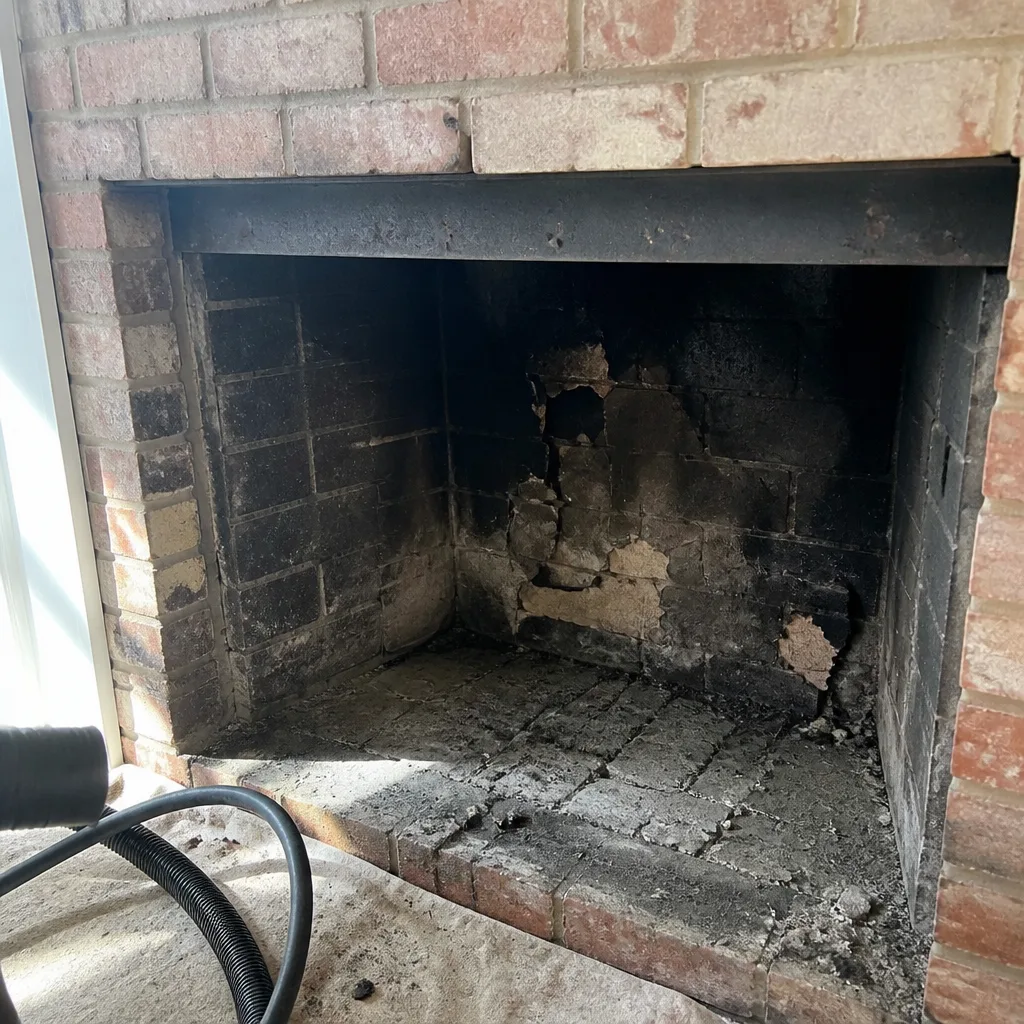 Before
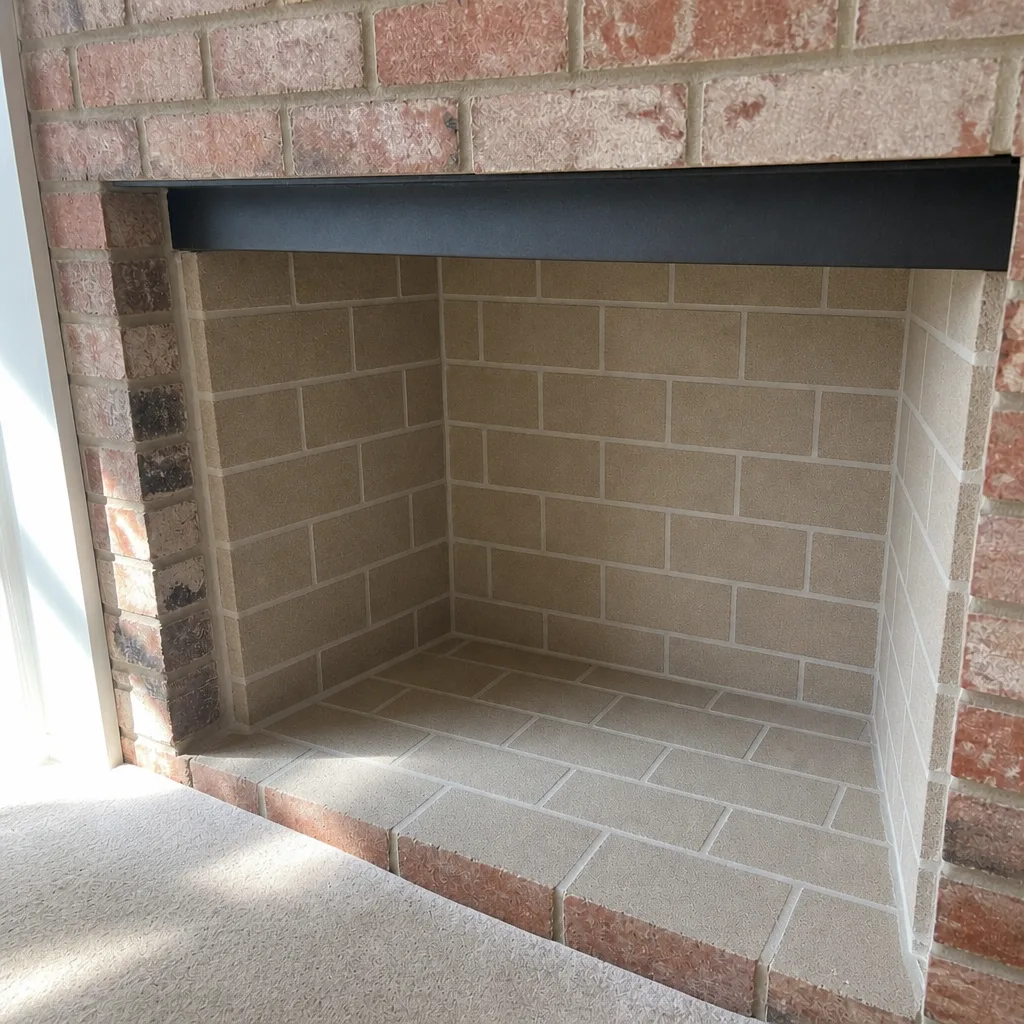 After
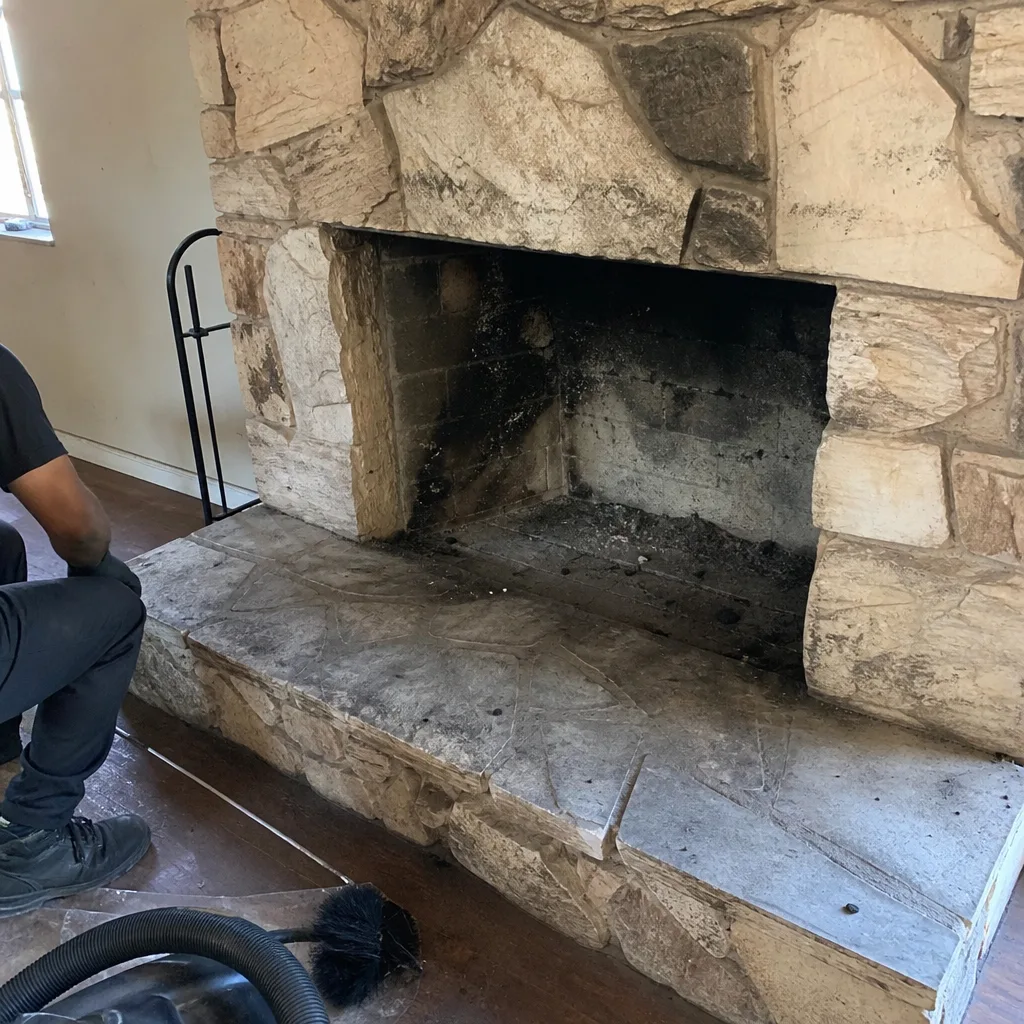 Before
 After
 Before
 After