
Last updated November 5, 2026
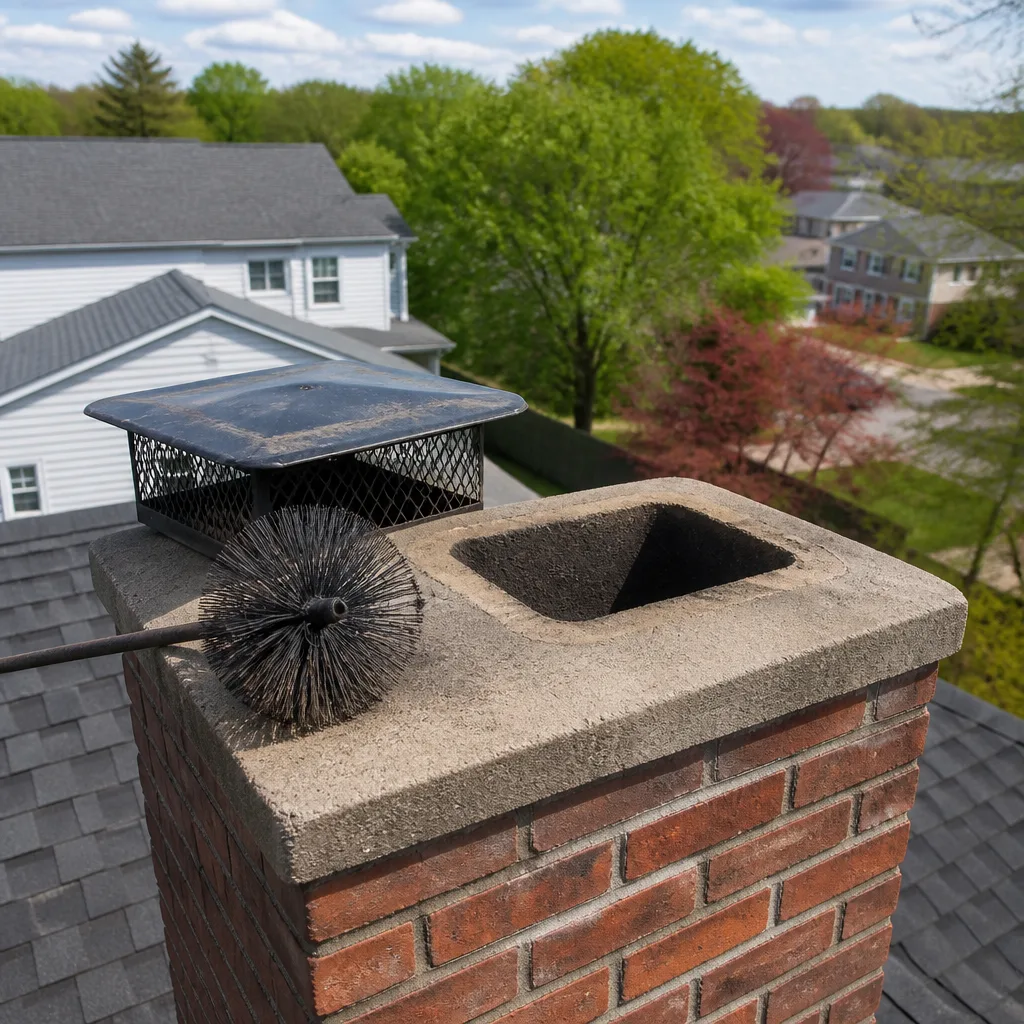 Sweep & inspection
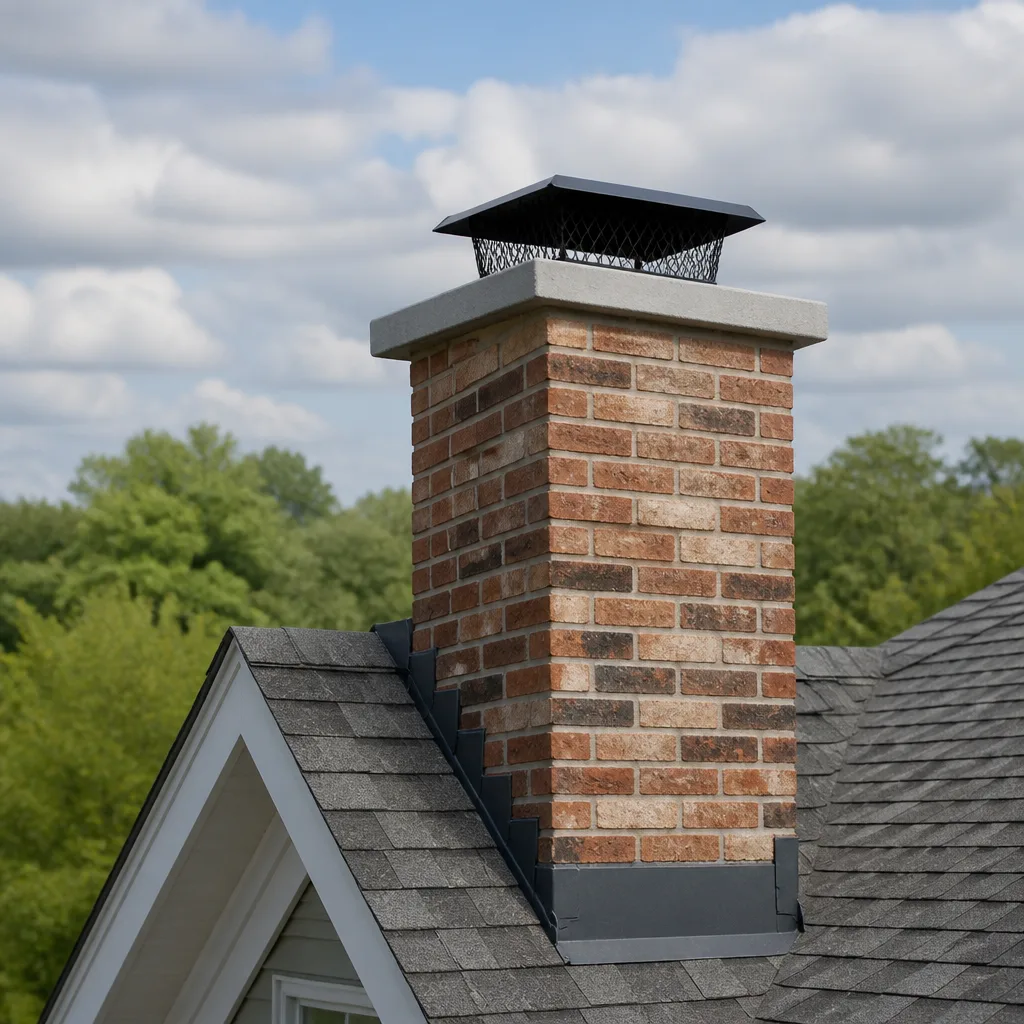 Caps & crowns
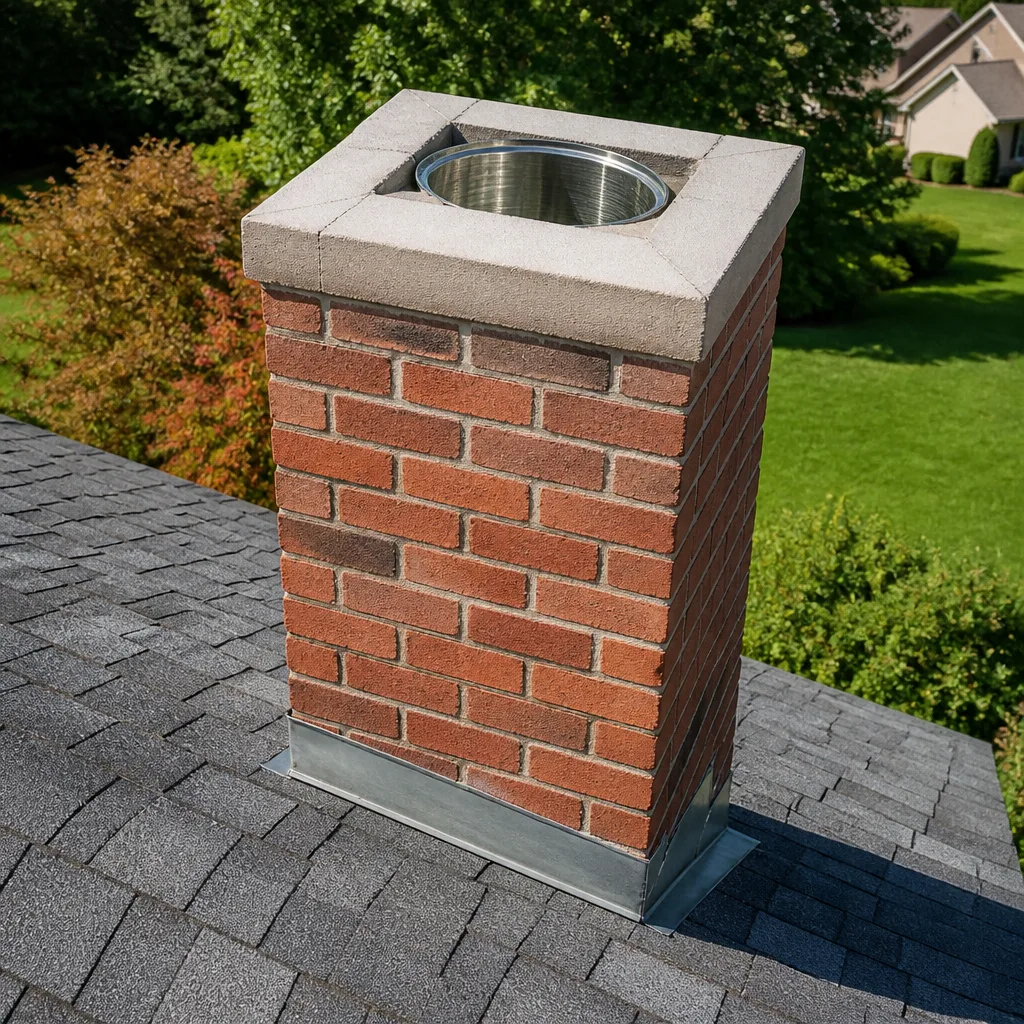 Flue relining
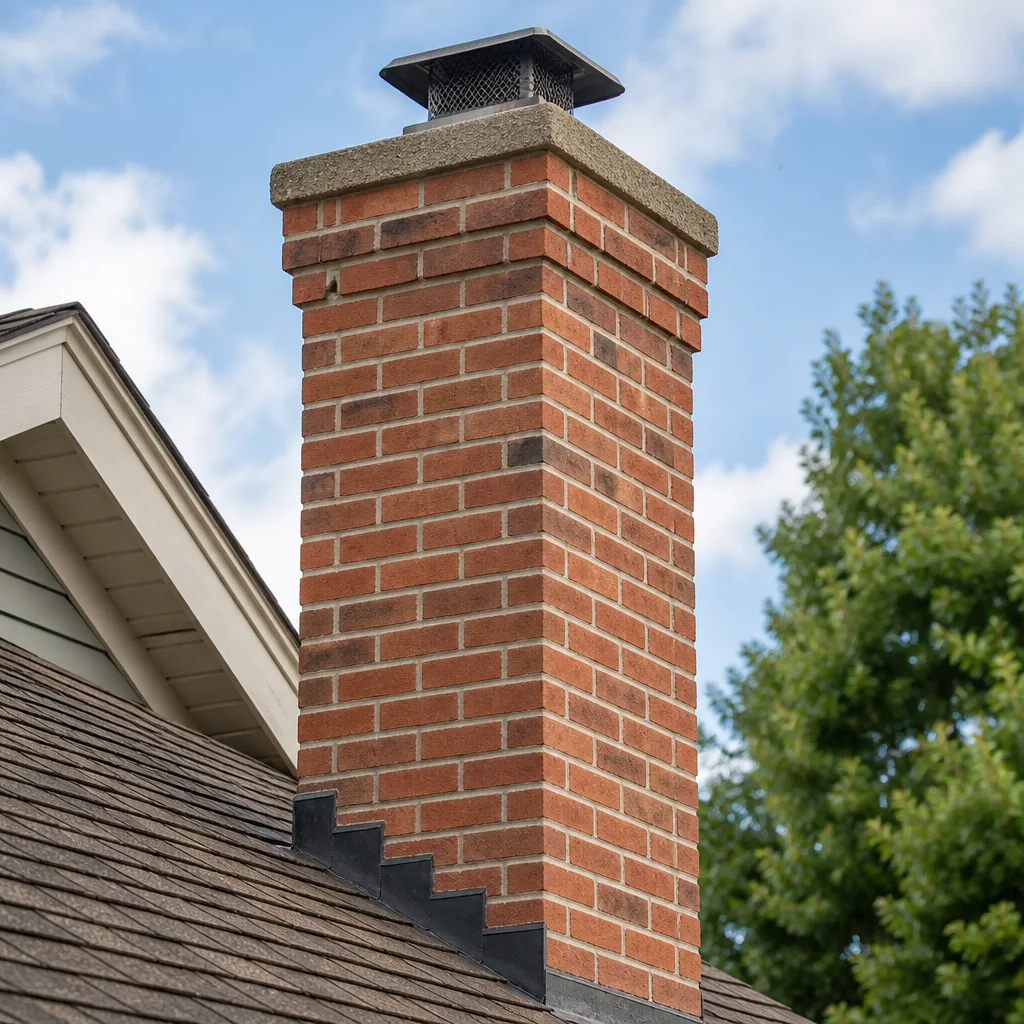 Masonry repair
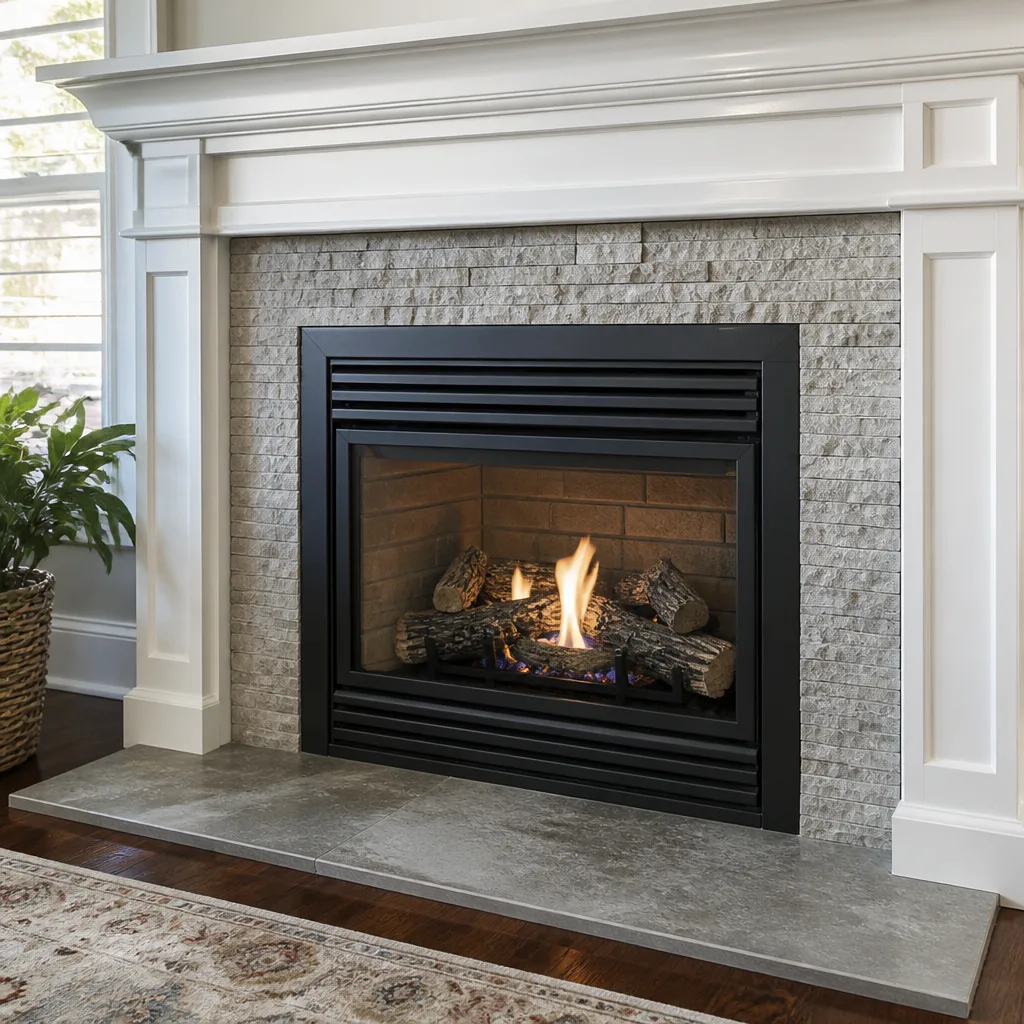 Gas fireplace service
Level 1 sweep and inspection to the NFPA 211 annual standard - flue, crown, cap, and flashing checked and photographed
Chimney sweep logs do not sweep chimneys. They loosen some creosote - which then falls where a brush and vacuum still have to collect it.
Chimney Cleaning Warning Signs: A Fashion District Homeowner’s Reference Guide
A chimney that’s drafting smoke into your living room isn’t giving you a warning, it’s already failing. The real warning signs happen quietly and early: white staining on the exterior brick, a damper that feels stiff when you work the handle, a flue that smells like a damp campfire on a humid Fashion District morning when no fire has been lit for months. Most homeowners wait for the dramatic signals like visible smoke or animal sounds, but by then the repair is usually more involved and more expensive. This guide is written for the homeowner who wants to catch the early structural and behavioral indicators, the quiet cues that show up weeks or months before a chimney becomes a genuine safety risk. If you know what you’re looking at, a five-minute visual check from grade level tells you a lot.
Styles & brands we work with
- Sweep & inspection
- Caps & crowns
- Flue relining
- Masonry repair
- Gas fireplace service
Quick Answer
The earliest chimney cleaning warning signs in Fashion District are white efflorescence staining on exterior brick, a firebox smell like campfire or must on a humid day with no fire lit, a damper that’s stiff or won’t seal, and brown or rust-colored streaking inside the firebox. Any one of these can be cosmetic or minor, but two or more together usually means moisture is interacting with creosote or a liner gap is developing, which is exactly when a professional inspection pays for itself. Schedule a chimney sweep when you notice these signals together rather than waiting for smoke rollback.
Table of Contents
- Efflorescence: White Staining That Appears Before the Crack
- Spalling Brick and Crumbling Mortar: How to Read What You’re Seeing
- Odor Patterns as Diagnostic Signals: What Each Smell Actually Means
- Damper Behavior: The Hardware That Tells You the Flue’s Story
- Firebox Staining Patterns: Brown Streaks, Rust Lines, and White Mineral Deposits
- What You Hear: Draft Noises, Dripping, and Other Audible Clues
- Common Mistakes to Avoid
- When to Call a Professional
- Frequently Asked Questions
- The Bottom Line
Efflorescence: White Staining That Appears Before the Crack
White, chalky staining on the outside of a chimney is one of the most misunderstood signals in masonry. In Fashion District’s mild, dry climate, homeowners often assume white residue is just cosmetic or from sprinkler overspray, but on a chimney it’s almost always efflorescence, and efflorescence means water is moving through the masonry. When groundwater or rain penetrates brick, it dissolves naturally occurring salts inside the material. As that moisture migrates to the surface and evaporates, the salts stay behind as a white crust. On its own, a little efflorescence is not an emergency, but it is evidence that water is entering a system that should be staying dry.
What makes efflorescence an important early warning is the timeline. In our experience, white staining shows up months before visible cracking or spalling. The same water that carries salts outward is also working on the inside of the brick, degrading mortar joints from within. That’s the sequence: first the stain, then the softened joint, then the crack. Waiting until the crack appears means you’ve waited until the repair is structural instead of preventive. If you can reach the chimney with a hose and a soft brush, removing the surface deposit is fine, but removing the stain does nothing to stop the water source, and that’s the actual problem.
There are a few ways water gets into a chimney in Fashion District. A cracked or improperly sealed crown at the top is the most common entry point, followed by gaps where the flashing meets the roofline. Rain in this region tends to come in short, intense bursts rather than prolonged drizzle, which means water can pool briefly on the crown and find its way into any crack. A professional inspection can trace the water path quickly with a moisture meter and tell you whether the efflorescence is surface-level or evidence of deeper saturation. If you’d like a second set of eyes, Fireside Chimney Sweep inspects from the crown down, and we explain what we find before recommending any work.
Spalling Brick and Crumbling Mortar: How to Read What You’re Seeing
Spalling is the word for brick that has begun to flake, chip, or shed its outer face. It looks like the brick is peeling. Crumbling mortar is the sandy, graying material between bricks that has lost its binder and falls away when you run your thumb across it. Both are indicators of moisture already inside the masonry, and both get worse faster than most homeowners expect, especially in a climate where homes experience warm days and sharply cooler nights. That daily expansion and contraction works the same as any repeated stress: it finds the weak points and widens them.
Here’s how to distinguish surface weathering from active deterioration, from grade level and without touching a ladder. Surface weathering is even: the brick face is worn smooth or slightly rounded across a large area, and the mortar lines are uniformly shallow. That’s an older chimney doing what old masonry does, and it may not need immediate attention. Active deterioration is uneven: you’ll see one brick that’s recessed sharply compared to its neighbors, a mortar joint that’s clearly deeper on one end, or a single brick with a fresh-looking chipped edge. That pattern means water is concentrated in one area and masonry is actively failing there. Loose brick fragments on the roof or in the gutter below the chimney are also a reliable signal that spalling is active, not historic.
One thing to understand about spalling is that it doesn’t self-correct. A spalled brick has lost its protective outer skin, which means it absorbs water even faster. That accelerates the cycle. In our experience as a full-service chimney contractor, a small area of spalling caught early is often repairable without rebuilding large sections. Left unaddressed, spalling extends into the flue lining, and that’s where costs and safety risks escalate. If you see uneven wear on the chimney face, particularly if it’s concentrated near the top or at the roofline, a professional repair assessment now will usually be far less invasive than the alternative a year from now.
Odor Patterns as Diagnostic Signals: What Each Smell Actually Means
Chimney odors are a more reliable early indicator than most homeowners give them credit for. The key is to separate the patterns: what you smell, when you smell it, and what the firebox has been doing recently. A smell that appears only during or immediately after a fire is one thing. A smell that appears on a humid morning in July, with no fire lit for four months, is telling you something else entirely, and it’s often the first signal that creosote or a liner gap is present.
- Campfire smell in humid weather with no fire lit: This is a creosote signal. Creosote is hygroscopic, meaning it absorbs moisture from the air. When humidity rises in Fashion District, especially in the morning, creosote deposits inside the flue swell slightly and release their odor into the house. If you notice this smell, the flue has enough creosote buildup that moisture is actively interacting with it. That’s a cleaning-level signal: schedule a sweep before it becomes a performance problem.
- Rotten egg or sulfur smell near a gas insert: This one is important. Natural gas is odorized with a sulfur compound so leaks are detectable. A faint sulfur smell near the gas insert or firebox is not a cleaning issue; it’s a gas appliance issue. Ventilate the room, don’t operate the appliance, and call a professional who works on gas systems. If the smell is strong, the utility company’s emergency line is appropriate. A qualified chimney technician should still inspect the venting afterward, but the first step is ruling out a gas leak.
- Musty or animal-like odor from the firebox: A musty smell usually means organic material inside the flue is holding moisture. That could be a bird nest, leaves, or even an animal that found its way in and didn’t make it out. The smell will typically get stronger on humid days, same as the creosote smell. This is a direct indicator that the chimney lacks proper protection at the top, usually a missing or damaged cap. Cleaning removes the material, but if the cap isn’t replaced, the same problem returns next season. We recommend addressing both in the same visit whenever possible.
If you notice any chimney odor that appears without a fire, don’t reach for an air freshener and move on. The smell is a data point. Note when it appears, whether it’s stronger in the morning or evening, and whether it changes when the damper is opened or closed. That information helps a technician identify the source quickly. At Fashion District homes especially, where floor plans are often compact and the fireplace sits at the center of the living space, a persistent odor has nowhere to dilute, so residents notice it early and that’s a good thing.
Damper Behavior: The Hardware That Tells You the Flue’s Story
The damper is the metal plate above the firebox that opens when the fireplace is in use and closes to seal the flue when it isn’t. Most homeowners think about the damper twice a year: once when they open it in the fall and once when they close it in the spring. But the damper is a diagnostic window into what’s happening higher up in the chimney. When the damper starts to behave differently, it’s often because something in the flue has changed. Here’s how to read what it’s telling you.
- Stiff or hard-to-move handle: A damper that’s progressively harder to operate usually means creosote has built up around the hinge and plate. Creosote is sticky when warm and brittle when cool, but heavy deposits restrict the plate’s range of motion in both states. If the handle needs real force to move, the flue likely has enough buildup to justify a cleaning. A damper that’s stuck completely is a sign that buildup has reached an advanced stage.
- Damper that won’t seal completely: If the handle closes but you can still see a gap of light around the plate, or you can hear air moving, the damper has warped or the buildup is preventing full closure. In Fashion District’s hot months, a damper that won’t seal means conditioned air escapes up the flue constantly. In winter, it’s a cold-air source at the firebox even when the fireplace is dormant. A chimney sweep can remove the buildup and assess whether the damper itself needs replacement or just adjustment.
- Cold air at the firebox with the damper closed: This is the one that gets the most attention in our consultations. Place your hand inside the firebox opening with the damper fully closed. If you feel a stream of cold air flowing down, the seal isn’t functioning. It might be the damper plate, or the air might be coming through a liner gap or a missing mortar joint behind the firebox. If cleaning restores the seal and the draft stops, that’s a maintenance win. If the draft continues after a sweep and damper check, your chimney has a structural air path that needs repair. Ignoring this one is how small liner problems become big ones, because the air path also means a path for heat and combustion byproducts when the fireplace is operating.
The damper is the one chimney component you physically interact with, so it’s the component where changes are easiest to notice. If it doesn’t feel the way it used to feel, take that seriously. It’s telling you something about the condition of the flue above it.
Firebox Staining Patterns: Brown Streaks, Rust Lines, and White Mineral Deposits
Pick a sunny day and bring a good flashlight to the fireplace. The interior walls of the firebox carry a running record of what the chimney has been through, and most of it is readable without any special knowledge. The key is learning to separate the stains that are permanent and harmless from the stains that indicate moisture movement or a developing liner issue. Here’s a guide to what you’ll likely see in a Fashion District home.
- Brown streaking running vertically down the back wall: This usually indicates water flashing to steam against hot firebox walls, picking up creosote and soot, and depositing it as a brown streak as it runs down. It’s a sign that small amounts of water are entering from above even during the burning season, and the water is interacting with the combustion byproducts. A brown streak that appears below the damper area, where the firebox meets the flue, is especially worth a professional look.
- Rust lines along the damper frame or firebox floor: Rust means metal, water, and time. If the damper frame, a metal lintel, or the firebox floor is showing rust staining, water is pooling or condensing in the firebox when the fireplace isn’t in use. That points to a crown or flashing issue above, or in some cases a chimney that’s breathing moisture from the ground up through the masonry. The rust line itself isn’t a cleanup problem. The water source is the issue.
- White mineral deposits on the firebox floor or walls: This is efflorescence showing up inside, and it means water has saturated the masonry around the firebox and is evaporating inward toward the room. It’s the indoor counterpart to the white exterior staining. Occasionally homeowners mistake these deposits for ash residue, but ash wipes away easily, while mineral deposits adhere and return after cleaning. If you clean the firebox and white staining reappears within a few weeks, that’s water infiltrating the chimney system, not poor housekeeping.
One thing to check carefully: bring the flashlight up to the damper opening and look for staining on the metal frame itself. That’s one of the earliest places rust shows up, and it’s also one of the most overlooked. If you can see rust on the damper frame with the firebox dry, moisture is working in the chimney during the months the fireplace sat idle. The source is usually above you, and the repair is usually straightforward if caught then. Dryer vent cleaning is part of the same whole-home ventilation picture here, because lint and moisture have their own version of this problem, just in a different duct. When the chimney shows water stains, the dryer vent often deserves a looked-at too, and we handle both.
What You Hear: Draft Noises, Dripping, and Other Audible Clues
Your ears can catch some chimney warning signs before your eyes do. Sound travels through the flue in ways that reveal what’s happening inside, and the conditions that create a problem usually create a noise at the same time. The trick is knowing what you’re listening for and when to pay attention.
Draft noises on windy days: A properly sealed chimney is quiet when the fireplace isn’t operating. If you hear a whistling, howling, or a faint fluttering sound from inside the chimney when the wind picks up, that’s air moving through a gap. The gap might be at the damper, at a mortar joint, or along the liner. Wind-driven air through the chimney also drags some of the flue’s odor into the house, so a chimney that’s both noisy and smelly on windy days is giving you two signals that agree. The shared root cause is often a liner gap or a crown that’s no longer sealing.
Dripping or trickling sounds during rain: Water inside a chimney makes sound as it runs down the flue, even when you can’t see it. A chimney that drips or trickles audibly during a Fashion District rainstorm is bringing water into the masonry, and that water is finding its way somewhere. The first stop is usually the smoke shelf above the damper, and from there it wicks into the surrounding brick. If the water makes it all the way to the firebox, you’ll see the staining patterns described earlier. If you hear it but can’t see any indication yet, that’s the earliest possible warning stage, and the right move is an inspection that includes the crown and flashing.
Mechanical or animal sounds: Scratching, fluttering, rustling in the chimney is usually an animal visitor, most often a bird that’s found a way past a missing cap. Animal entries matter for two reasons: the nesting material is a fire hazard when the flue is next used, and the animal itself is a source of pathogens and mess. The fix is a professional cleaning to remove the nesting, followed by a properly installed cap and spark arrestor. We’ve seen Fashion District chimneys with nests that filled the entire flue cross-section, and the smell was the first clue for months before the sound confirmed it.
Common Mistakes to Avoid
- Assuming a white stain is just sprinkler residue: In a dry climate, it’s tempting to blame hard water. But efflorescence on a chimney means water is moving through masonry, and sprinklers rarely reach the upper chimney face. Have it checked before the crack forms.
- Scraping creosote yourself with metal tools: The flue and liner are not designed to be scraped with improvised tools. Metal scrapers can gouge the liner, and aggressive home attempts often do more than the creosote was doing. Professional sweeps use brushes sized to the flue and method that matches the deposit.
- Waiting for smoke rollback before scheduling service: Most guides treat visible smoke as the primary warning sign, but it’s one of the latest signals. By the time smoke is coming into the room, the creosote or structural problem has been developing for months, and some of the earlier signals were likely visible.
- Fixing the stain but not the water source: Removing efflorescence or cleaning stains inside the firebox without repairing the water entry is cosmetic work. The stain comes back because the moisture path still exists, and the real damage continues invisibly.
- Using the fireplace before confirming the gas smell is gone: A sulfur smell near a gas insert is not something to test by running the appliance. Ventilate, don’t operate, and get professional eyes on it. The venting system still needs inspection after the gas issue is ruled out.
- Closing the damper and forgetting the flue until fall: A damper closed for six months doesn’t mean the chimney is protected. Water, animals, and creosote continue to interact with the chimney all summer, and humid mornings reveal a lot if you’re attentive to the smells.
- Assuming a newer home means no chimney problems: We’ve found cracked crowns and liner gaps in chimneys on homes that are only a few years old. Construction quality varies, and a visual check from grade level is free. A chimney built last year can still fail a flashing inspection today.
When to Call a Professional
Some signals call for a professional’s eye immediately. If you have two or more of the indicators in this guide showing up together, schedule an inspection. If you hear water inside the chimney during rain, don’t wait until it shows up on the ceiling below, because that’s a repair at the roofline and the water path is often inside the masonry. If you have a gas insert and smell sulfur, that’s a professional call the same day, and the venting needs to be inspected even if the gas line checks out. If your damper is stuck or won’t seal, the flue above it has questions that only a proper inspection and camera look can answer. Fireside Chimney Sweep offers free estimates in Fashion District. Call (844) 963-3205. We answer 24/7. Fast dispatch from 7am to 7pm, Sunday through Friday. When the earliest signals are caught, the fix is usually a sweep and a small repair, not a rebuild.
Frequently Asked Questions
Most homeowners should have a chimney swept after every cord of wood burned, or once a year, whichever comes first. Fashion District’s climate doesn’t demand a different schedule from the national guidance, but the humid mornings do make creosote odor more noticeable, so some homes notice the need early. Gas fireplaces can go longer between cleanings but should still be inspected annually for venting and burner condition. The annual rhythm is also the most reliable way to catch the early structural signals described in this guide before they progress. Call (844) 963-3205 for an exact estimate, and we’ll tell you honestly whether a sweep is due or can wait.
A standard chimney sweep in Fashion District typically costs between $180 and $325 depending on the condition of the flue, the type of appliance, and whether there’s creosote buildup beyond standard. That’s the range for a routine cleaning of an open fireplace; inserts and wood stoves can be somewhat higher because of access and disassembly. A written estimate sets the final price before we start, so there’s no surprise. Call (844) 963-3205 and we’ll give you a real number for your specific chimney, not a ballpark.
Creosote continues to build, and at a certain thickness it becomes a fuel source rather than a residue. A hot fire can ignite it, and a chimney fire can crack the liner, send flames through the roof, and reach the house structure before you realize what’s happening. Skipping cleaning also means the early warning signals in this guide keep progressing, so a simple sweep you postponed becomes a relining you can’t avoid. The most common outcome we see after skipped cleanings is a chimney that needs HeatShield resurfacing or a DuraFlex liner, work that costs thousands more than the cleaning would have. Call (844) 963-3205 if you’re behind on maintenance, and we’ll get you current safely.
A liner recommendation should always be backed by evidence you can see for yourself, usually camera footage of cracked flue tiles, a gap at the mortar joint, or a flue that’s sized wrong for the appliance. At Fireside Chimney Sweep, we show you what the camera shows before we discuss repair options. Some damage can be addressed with HeatShield resurfacing, which restores the flue surface without demolition in many cases. Other damage requires a DuraFlex liner system. If a contractor recommends a liner without showing you the inside of your flue, get a second opinion. We’ll show you the proof and tell you honestly if the chimney is safe to use as-is.
That’s creosote inside the flue absorbing humidity and releasing its odor into the house through the firebox opening. It’s a direct signal that the flue has enough buildup that moisture is interacting with it, and it typically means a cleaning is overdue. The smell is strongest in the morning because that’s when humidity is highest in Fashion District. A sweep removes the creosote and the smell goes away with it. If the smell persists after a full sweep, the flue likely has a gap that’s holding old residues, and we’ll investigate that as a repair item.
You can absolutely do a useful visual inspection from grade level and from inside the firebox, and this guide gives you the framework for what to look for. What you can’t do from the ground is see the crown, the flashing, or the interior of the flue, and those are the places where the most expensive problems start. A professional inspection with a camera sees what’s hidden, and that’s the gap between a homeowner’s check and a real diagnosis. At Fireside Chimney Sweep, the estimate is free and the inspection is part of it, so there’s no cost to having us look. Call (844) 963-3205. We answer 24/7, and we’ll book you into our next opening, Sunday through Friday, 7am to 7pm.
The Bottom Line
Your chimney gives you a long runway of early warning signs before it becomes genuinely dangerous. White efflorescence, spalling brick, a damper that fights you, stains that reappear after cleaning, and smells that arrive with the humidity are all signals worth learning to read. In Fashion District’s climate, the morning humidity makes odor a particularly early and reliable indicator, and a five-minute check a few times a year is genuinely enough to catch most problems at the right stage. The best time to act on these signals is the moment you notice them, because the fixes are smaller, cheaper, and safer early. We work with professional-grade materials including Copperfield, DuraFlex, and HeatShield, and we can handle the full spectrum from a routine sweep to a complete relining. Call (844) 963-3205 for a free estimate. We answer 24/7. Fast dispatch from 7am to 7pm, Sunday through Friday. When the quiet signals show up, answer them.
Written by the team at Fireside Chimney Sweep, serving Fashion District since 2012.
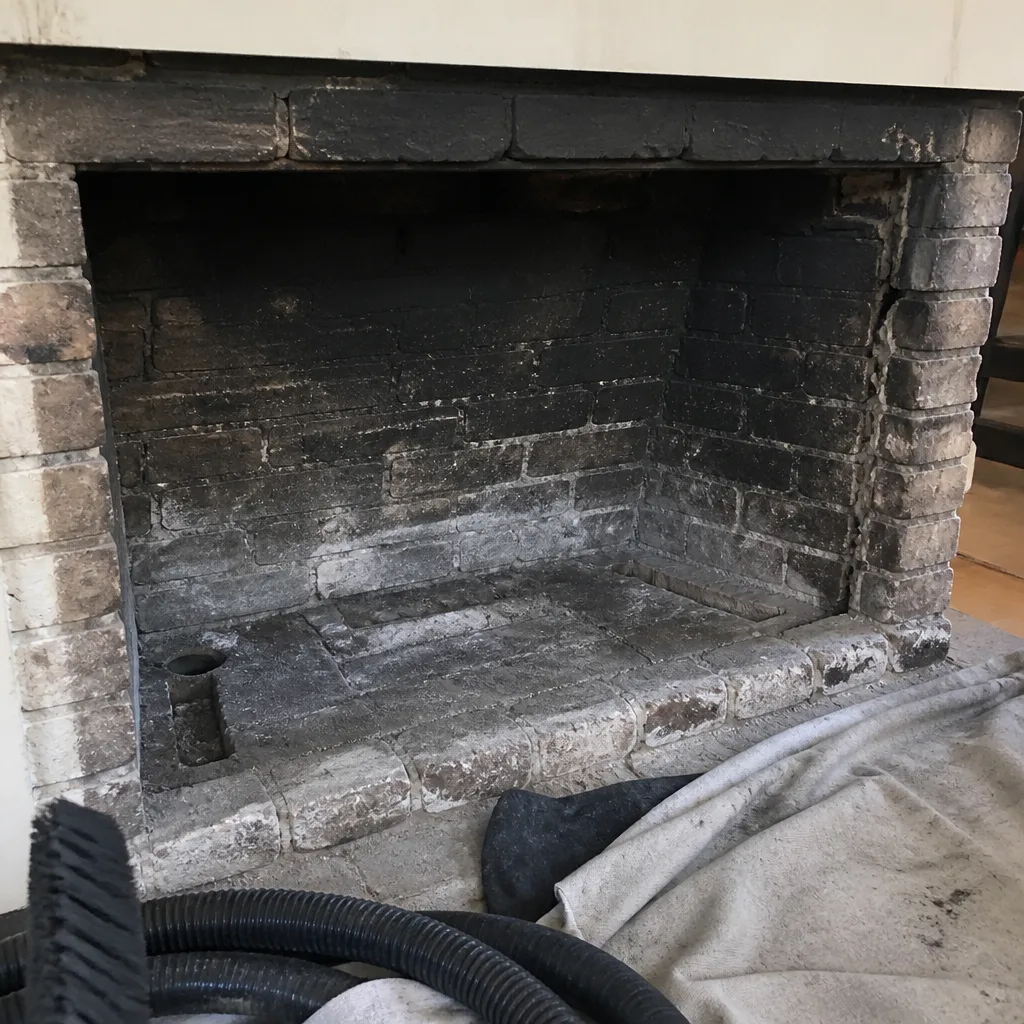
See the difference
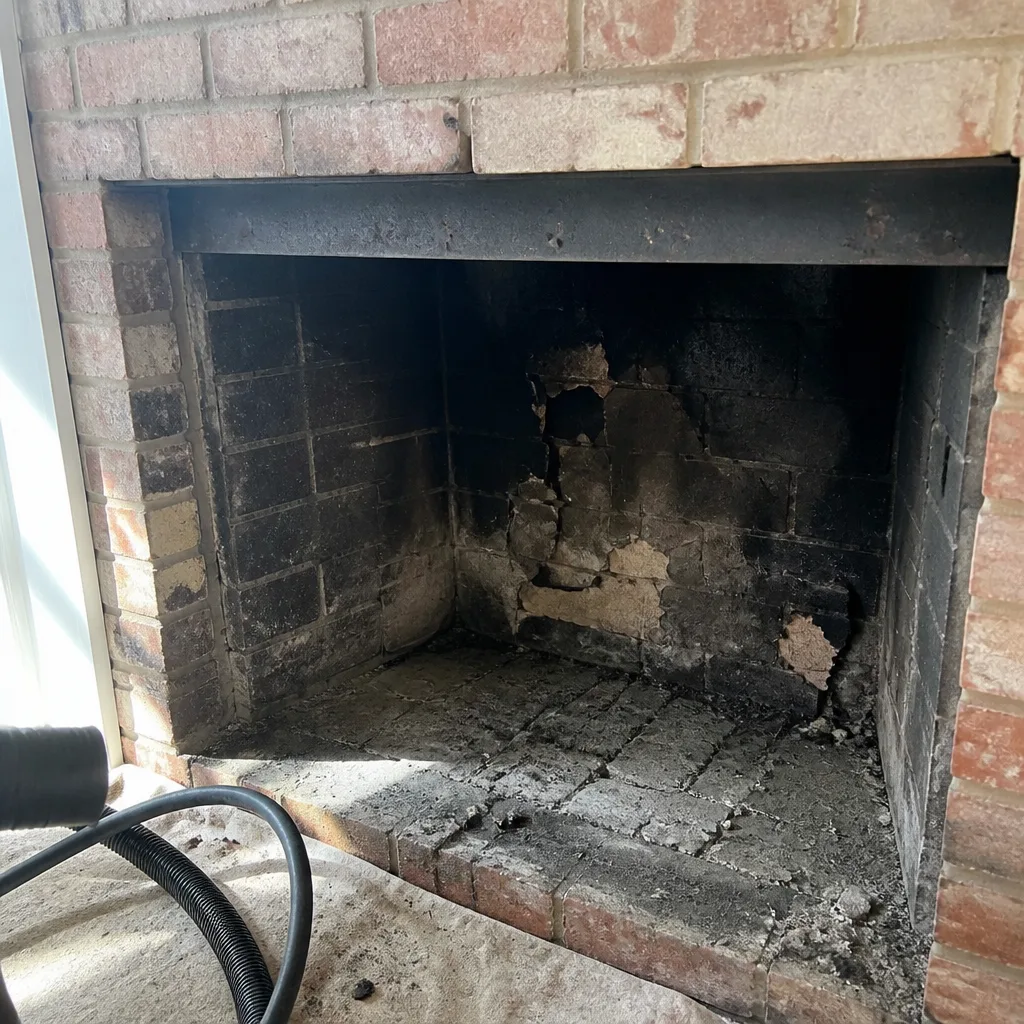 Before
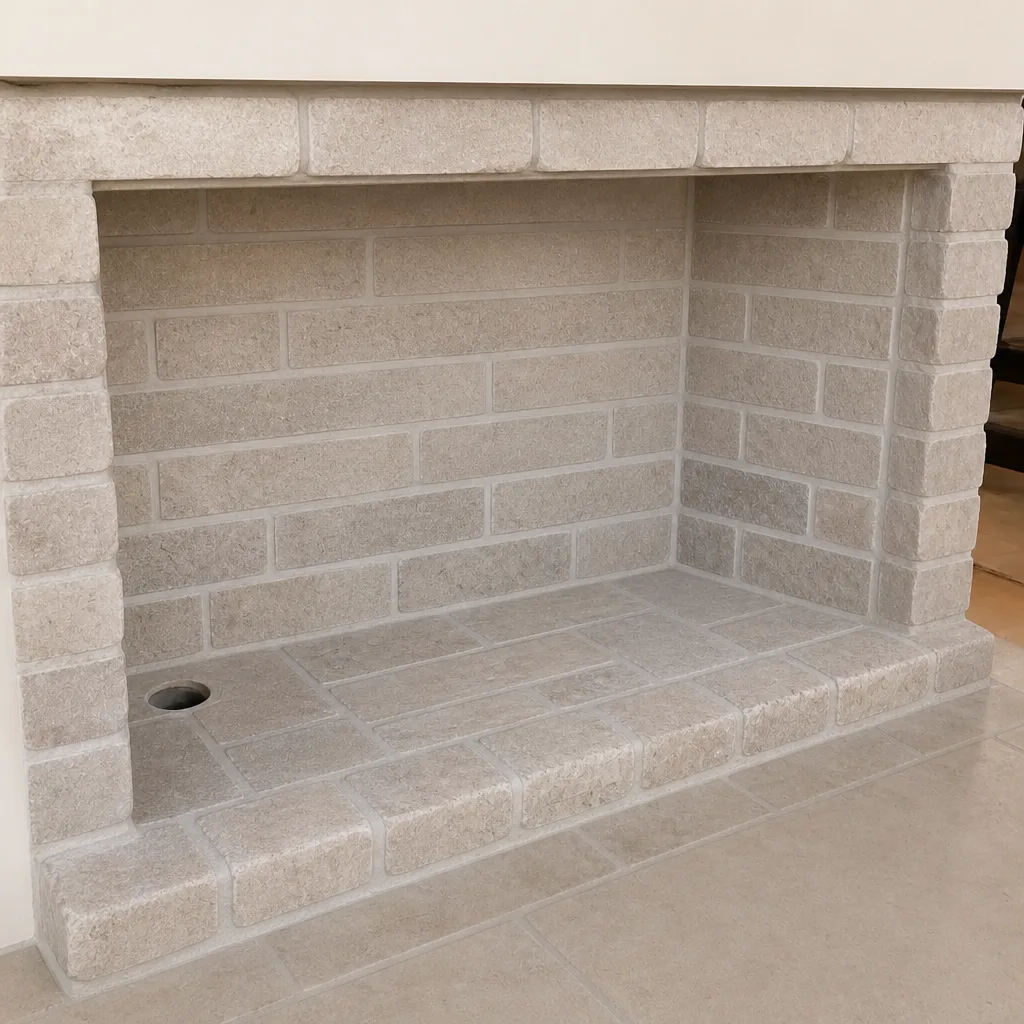
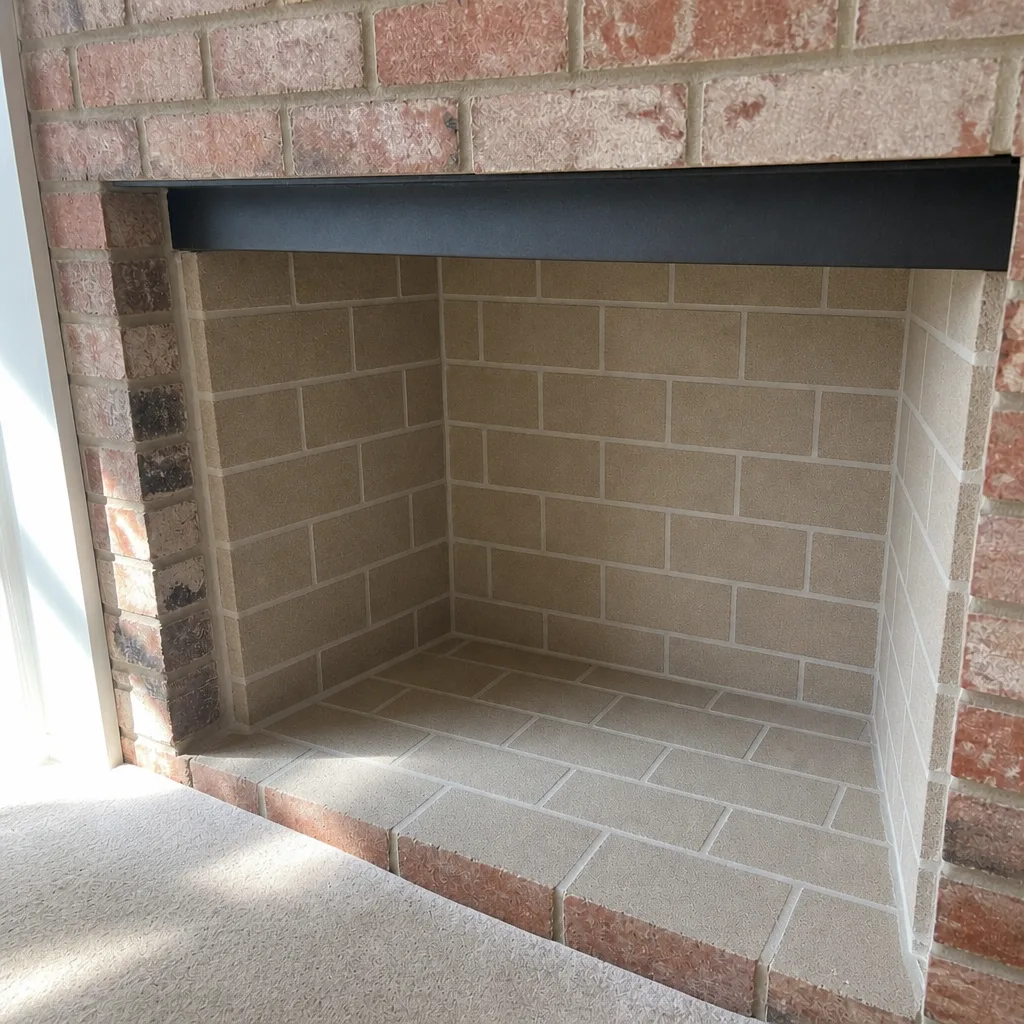 After
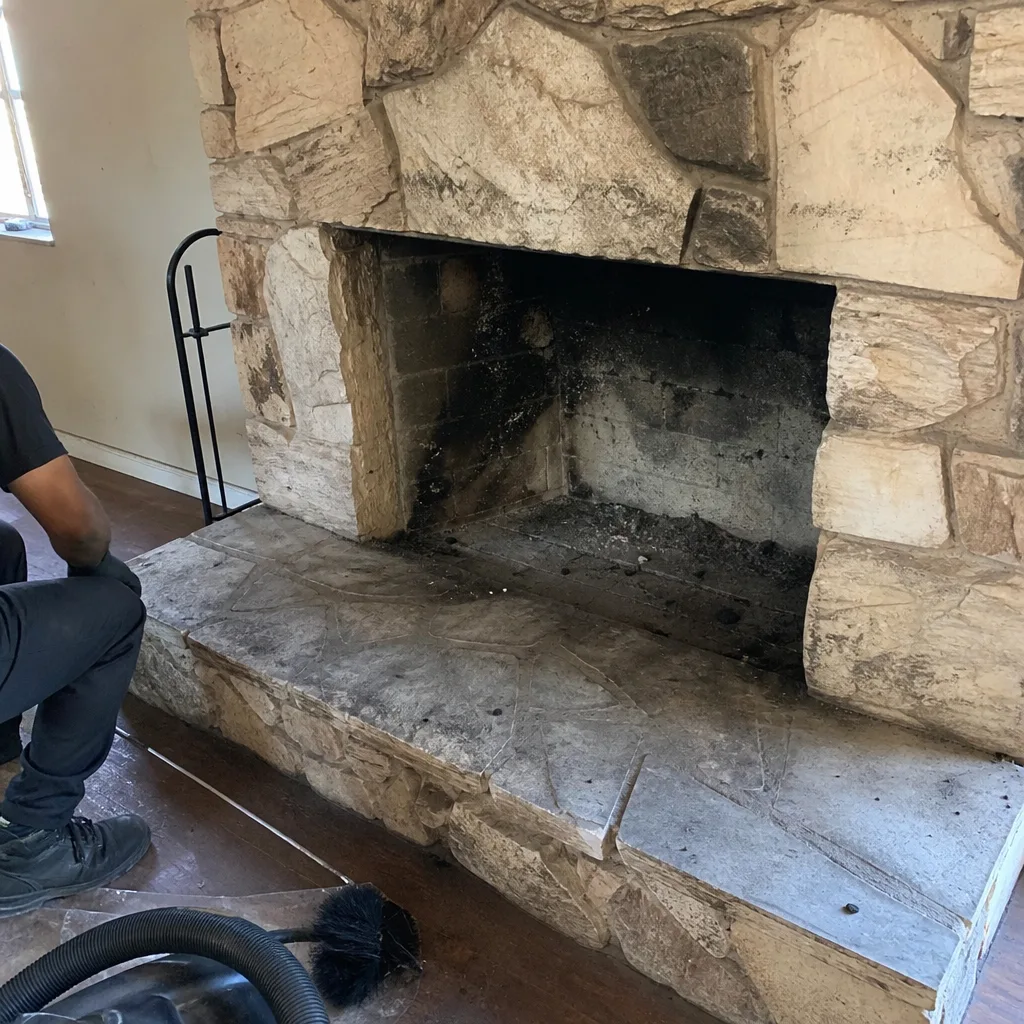 Before
 After
 Before
 After